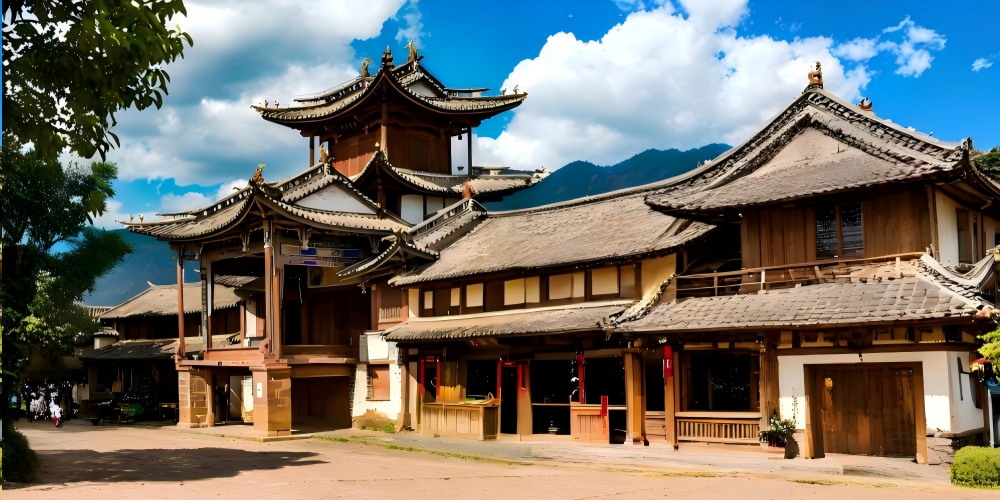
Ancient Town Shaxi was once an important stop along the Ancient Tea Horse Road. As the route declined, it gradually faded into obscurity. However, this very isolation has preserved its tranquil, rustic charm, allowing it to retain the authentic atmosphere of its tea-trading past. Locals in northwest Yunnan say: “Visit Dali, pass through Lijiang, but don’t miss Ancient Town Shaxi.” Tour Route Crossing the ancient stone bridge over the Heihui River—Yujin Bridge—and walking about 100 meters along the old trail, you’ll reach the East Village Gate, locally known as “Jiezi Gate.” Built with rammed earth, this narrow gate allows only two horses to pass simultaneously, preserving its original appearance from the Tea Horse Road era. Beyond it lies Sideng Street, the sole surviving market along the Tea Horse Road and the heart of Ancient Town Shaxi. The street is paved with red sandstone slabs, flanked by an ancient opera stage facing west on the east side and Xingjiao Temple facing east on the west side, creating a symmetrical layout that divides the square into northern and southern halves. Surrounding the square are shops and horse inns, with three ancient alleyways extending in all directions of the town. Ancient Town ShaxiHighlights: Xingjiao Temple Xingjiao Temple is a major highlight of Ancient Town Shaxi. As one of the few remaining Bai ethnic “Atoli” Buddhist temples from the Ming Dynasty in China, its exquisite murals and carvings are worth savoring. Visitors can enter for free by registering their ID cards. During ethnic festivals, Bai people dressed in traditional costumes gather at Sifang Street, playing the dragon-headed sanxian and performing songs and dances on the stage. The bustling square fills with crowds while devotees worship at the temple, creating a joyous atmosphere. The liveliest celebration is the annual Prince Festival on the eighth day of the second lunar month. Accommodation and dining Ancient Town Shaxi is quite small and can be explored in just 1–2 hrs of casual strolling. However, if time allows, we recommend staying overnight to leisurely wander along the old streets and savor the tranquil charm that Dali Ancient Town lacks. The town offers affordable accommodations like youth hostels and various inns. You can grab meals at roadside eateries or try local specialties such as yacon, matsutake mushrooms, and milk cakes.
归档: Attractions
-
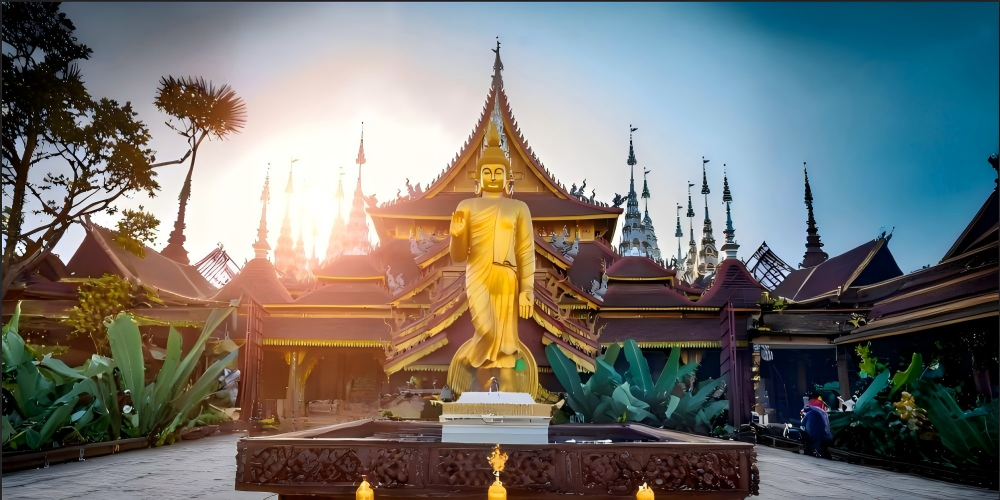
Xishuangbanna General Buddhist Temple
The Xishuangbanna General Buddhist Temple is located near Manting Park in Jinghong Town, serving as the spiritual center for Buddhist devotees in Xishuangbanna, with a continuous stream of worshippers visiting. The temple’s grand and majestic architecture features unique details in every corner, with exquisitely carved beams and pillars that offer visual delight. The Xishuangbanna General Buddhist Temple is connected to the Manting Imperial Garden, and visitors typically enter the temple through the garden. Visitors can first admire the magnificent exterior architecture, and if time permits, step inside to experience Buddhist rituals, quietly meditate, and listen to the sounds of nature. Known as “Waba Jie” in the Dai language, the Xishuangbanna General Buddhist Temple has long been the central pilgrimage site for local Buddhists. Before liberation, it was a sacred place where the region’s highest rulers and chieftains came to pray, and it remains one of the most prestigious Buddhist temples in Xishuangbanna.
-

Ganden Sumtseling Monastery
Songzanlin Temple, also known as Guihua Temple, is located at the foot of Foping Mountain, 5 kilometers north of Shangri-La. It is not only the largest Tibetan Buddhist temple complex in Yunnan, but also the center of the Yellow Sect in northwestern Yunnan, known as the “Little Potala Palace”. The monastery is built on the mountain and looks like an ancient castle. Every year on the 29th day of the 11th lunar month, Tibetans hold the Gedong Festival, which is mainly based on “God Dance” (mask dance). The atmosphere is mysterious and warm.
-
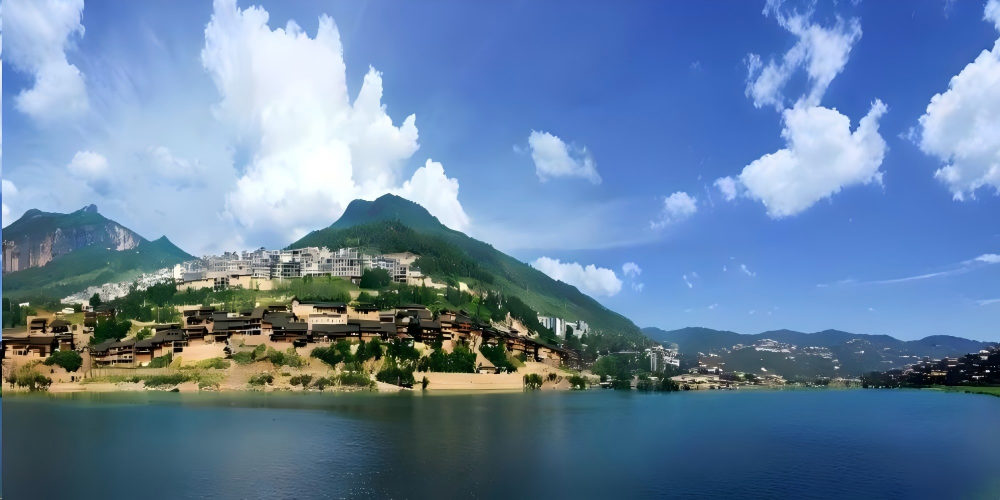
Old Town of Lijiang
The Lijiang Ancient City is a UNESCO World Heritage Site that has a history of over 800 years. It was an important stopover point in ancient times playing a very important role in the trading activities among Yunnan, China hinterland, Tibet, India and many other neighbouring Asian countries. The town is full of ancient wooden buildings, stone roads, and small bridges. It is the only old city built without a city wall. Standing in the city, you can see the Jade Dragon Snow Mountain. Several television series were also shot here. The former mansion of the Tusi people (Mu Mansion) and the Naxi ancient music performances should definitely be on your checklist.
-

Dali Ancient City
Dali Ancient City lies at the foot of the picturesque Cangshan Mountain, serving as the former capital of the ancient Nanzhao and Dali kingdoms. This is a place made for living—locals follow the sun’s rhythm, tending to flowers and basking in sunlight during leisure hours. With its abundant sunshine and pleasant climate, it attracts countless visitors.In Dali Ancient City, you can spend your day strolling along Fuxing Road, a pedestrian street lined with shops selling local specialties like marble carvings, ethnic costumes, and regional snacks. Browse through the vibrant stores to discover unique handicrafts, and when you need a break, stop by the roadside eateries to sample authentic local flavors.At night, immerse yourself in the local vibe by joining the crowds at Foreigner Street and Renmin Road. This area boasts an array of unique bars and cozy cafes, with some venues featuring live performances by resident singers or impromptu acts from fellow travelers. The lively atmosphere is electric. Lose yourself between cocktails and music to discover your own unforgettable nightlife experience.
-

Dianchi Lake
Dianchi Lake is also called Kunming Lake. It is the sixth largest freshwater lake in China. It has the nickname of “Sparkling Pearl Embedded in a Highland”. The lake is wide and spectacular. Every winter, a large flock of red-billed gulls migrate here from Siberia, making it a good place for bird watching and bird feeding. There are different ways to explore Dianchi lake. You can stroll around the lake, cycle, or ride a boat. You can also climb up to the Dragon Gate overlooking Dianchi Lake to get a better view of the entire lake.
-
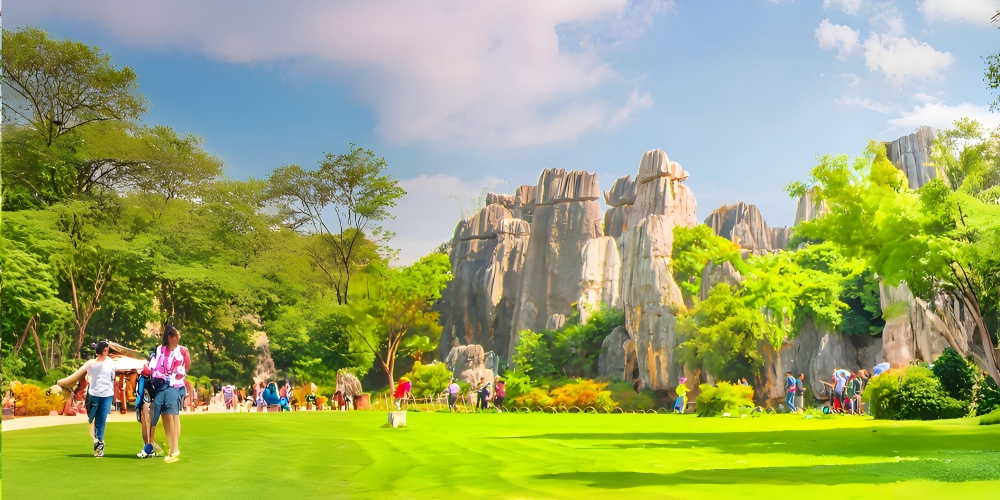
Stone Forest Scenic Area
The Stone Forest Scenic Area is located in Shilin County, Kunming, and is one of the key attractions in the city. This scenic area showcases typical karst landforms, featuring stone peaks, pinnacles, sinkholes, and underground rivers. The towering rock formations take on various shapes—sword-like, pagoda-like, mushroom-like, and more—creating a breathtaking and fantastical landscape. The Stone Forest Scenic Area is divided into several widely spaced sections, with the Greater and Lesser Stone Forest attractions at its core. The Naigu Stone Forest is located approx. 12 km north of the main attractions, while the Dadie Waterfall scenic area sits approx. 29 km southwest. The Changhu Lake area is positioned 26 km southeast of the main site. When visitors refer to touring the Stone Forest, they typically mean exploring the Greater and Lesser Stone Forest sections. The Greater and Lesser Shilin are located in the same area. After purchasing tickets at the main entrance and walking along the path for 20 minutes, you’ll find the smaller and more gently sloped Lesser Shilin Scenic Area on your left. Amidst the dense cluster of peaks stands the famous Ashima Stone, where the majestic karst formations resemble a graceful Yi ethnic maiden named Ashima, seemingly waving to visitors—a favorite photo spot for travelers. Beyond the striking Ashima, the Lesser Shilin area features other captivating views like the Steed and Pillar Supporting the Sky, each with unique shapes. This is where your imagination is put to the test. If you find your imagination lacking, we recommend hiring a guide who can offer fresh perspectives on these remarkable formations. As you drive leisurely along the highway, you’ll encounter a series of remarkable rock formations lining the roadside—the Tang Monk Stone, Stone Prison, Phoenix Combing Its Wings, and Lingzhi Mushroom Rock—each vividly lifelike and exquisitely crafted by nature’s artistry, presenting their unique postures to showcase Earth’s wondrous creations. Strolling along the pathway, you’ll unexpectedly arrive at the Great Stone Forest Scenic Area. After marveling at wonders like “Two Birds Sharing Food,” “Rhinoceros Gazing at the Moon,” “Lotus Peak,” “Shilin Grand View,” and “Stone Screen,” you might feel slightly fatigued. Take a peaceful break at Lion Pavilion while admiring the inverted peaks reflected in Lion Pool across the way. After prolonged exposure to these karst formations, visual fatigue may set in—making it the perfect moment to shift perspectives. Board a cruise on Shilin Lake, where mountain vistas and water scenery converge into one breathtaking panorama, dissolving all stress and worries. If you prefer not to walk, electric carts driven by Yi ethnic women shuttle between attractions and stop upon request. You can still marvel at the wonders of the Stone Forest Scenic Area, and some friendly drivers may even share interesting local anecdotes along the way. Naigu Stone Forest, also known as New Stone Forest or Mozhai Stone Forest, is located 13 km north of the Stone Forest Scenic Area. It features a landscape composed of stone formations, Baiyun Lake, Shifeng Mountain, and Yougu Xianpu Waterfall. Compared to the Stone Forest Scenic Area, this site offers a distinct style. The towering gray-black stone pillars here are densely packed, resembling castles, towers, and mushrooms. The rugged, primitive rock formations surge skyward like waves, creating a majestic atmosphere. Walking through these dark peaks feels like stepping into a primeval world.
-

Xishuangbanna Tropical Botanical Garden
The Xishuangbanna Tropical Botanical Garden of the Chinese Academy of Sciences is located in Yilun Town, Mengla County, Xishuangbanna. The park is divided into two parts: the eastern area and the western area. The West District is the main attraction. It includes more than 20 specialized botanic gardens. The “Exotic Flower Garden” is the most popular among tourists. Eastern District is a large area of old-growth tropical rain forest. Most areas are paved with viewing trails, suitable for travelers who enjoy hiking.
-
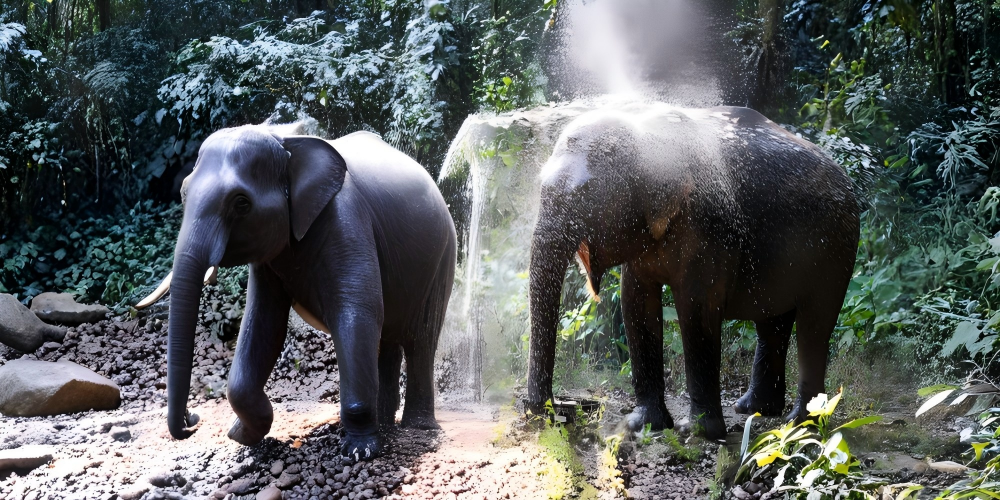
Wild Elephant Valley
Located in Jinghong, Yunnan Province, Wild Elephant Valley is a place frequented by wild Asian elephants, hence the name. A footpath as long as 4,000m winds its way amid tropical forests inside, where roaming along, one may get an intimate feel of the rain forest. Rare tropical plants dot either side of the pathway. One may even spot tracks left behind by wild elephants.
-
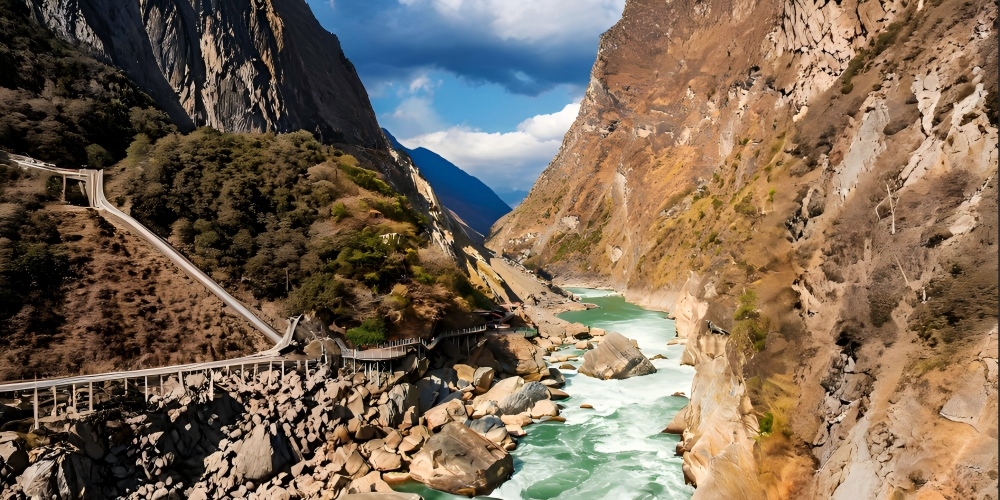
Shangri-La Tiger Leaping Gorge
Tiger Leaping Gorge is famous for its size. It is located in the eastern part of Hutiaoxia Town, Shangri-La County. It is divided into three sections: upper, middle and lower gorges, with a total length of about 20 kilometers. In the middle of the gorge is the Jinsha River. On both sides are the snow-capped mountains of Yulong and Haba. The narrowest part of the river is only twenty or thirty meters and with the huge drop, the river flows very rapidly! Tiger Leaping Gorge is also a world-renowned hiking resort visited by many outdoor enthusiasts every year.