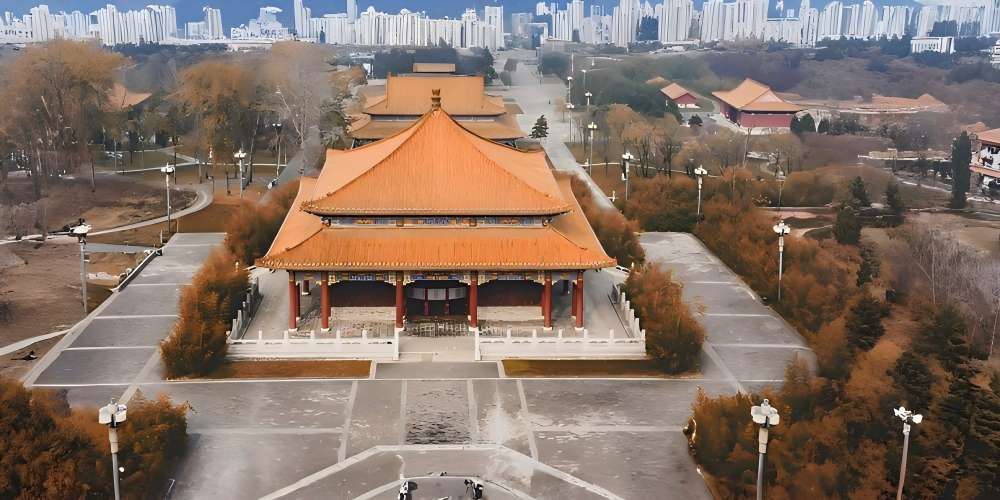
Located in Zhouzhi County, Louguantai National Forest Park is the place where Lao Tzu wrote the ” Morality Classics” and gave his disciples Han Gu Guan Ling Yin Xi to talk about the scriptures. There are many Taoist temples nearby, and the Taoist culture is rich. There are large bamboo forests in the park and is one of the few places in the northwest that can see bamboo forests. In the scenic area, a large piece of green bamboo is there to greet people. As a test base for “Nanzhu move northwards”, Louguantai enables visitors to see the rich bamboo from the south in the northwest. It has been the home of Taoist education since ancient times.
归档: Attractions
-
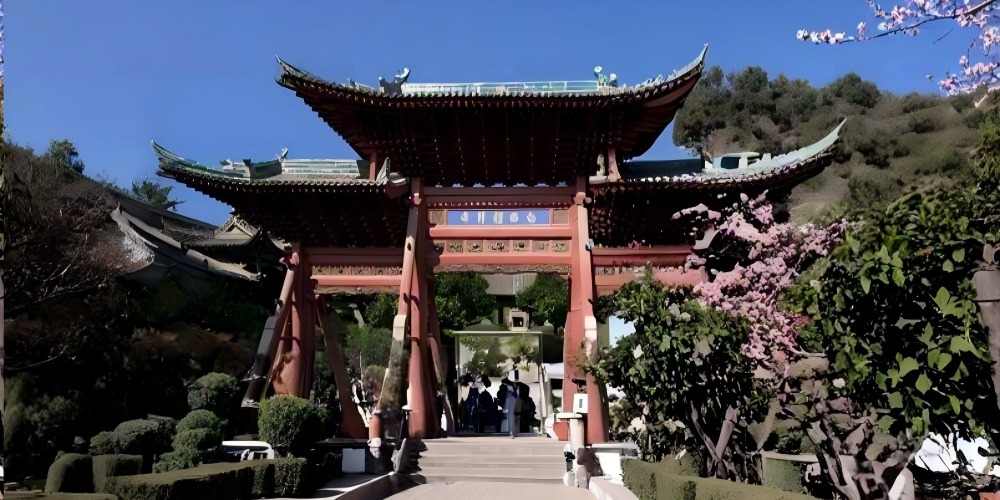
Huajue Lane, the Great Mosque
The temple is located in the alley of Huimin Street. It was first built in the Tang Dynasty and rebuilt in the Qing Dynasty. It adopts the Chinese classical architectural style, with flying eaves, pavilions and towers everywhere. On many wooden doors and brick walls in the temple, you can see a lot of wood carvings and brick carvings, which depict Chinese floral patterns in the three-dimensional style of Islamic art.The temple is not large in area, and the pattern is also the traditional Chinese courtyard style with central axis symmetry. Visitors can walk forward along the central axis to visit, which is very easy. The screen wall in the temple is the starting point of the central axis. Along the central axis, the main buildings are arranged in sequence, such as the wooden archway, the five-room building (two doors), the stone archway, the imperial repair hall (three doors), the Xingxin building, the three-door (four doors), the Phoenix Pavilion, the platform, and the prayer hall.The prayer hall is a very important building in the temple and a place for nearby Hui people to worship. The main hall has a peacock blue glazed tile roof, and the ceiling caisson painting in the hall is very exquisite. There is a stone tablet around the stone archway with the words “Dao Fa Can Tian Di” written on it, which is the handwriting of Song Dynasty calligrapher Mi Fu; there is a horizontal plaque “Chi Ci Bai Li Temple” on the door of the Imperial Repair Hall, which is the handwriting of Ming Dynasty calligrapher Dong Qichang. These are not to be missed by calligraphy lovers.
-
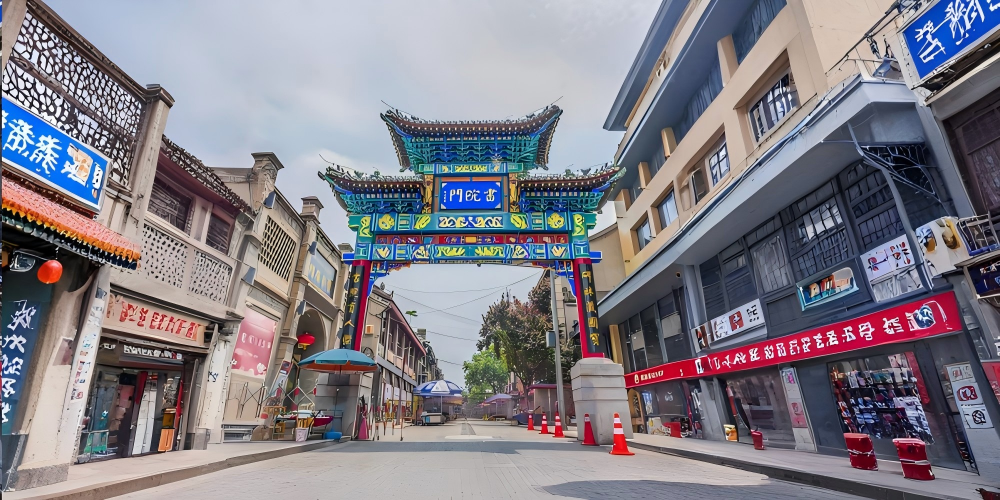
Academy Gate Pedestrian Street
Shuyuan Gate Pedestrian Street is a walkway free from vehicles and is infused with refined culture and learning. On the west side, Shuyuan Gate Pedestrian Street intersects with Xi’An City’s South Boulevard. The Stele Forest Museum is located 250 meters and three turns away from the east end of Shuyuanmen. The quaint cobblestones of the pedestrian street lead you down a path of history. Small shops line both sides of the road and sell calligraphy scrolls, painting, ink brushes, inksticks, calligraphy paper and ink stones. This artisan street is quite unlike other pedestrian shopping streets in China in that it is quiet and calm.
-
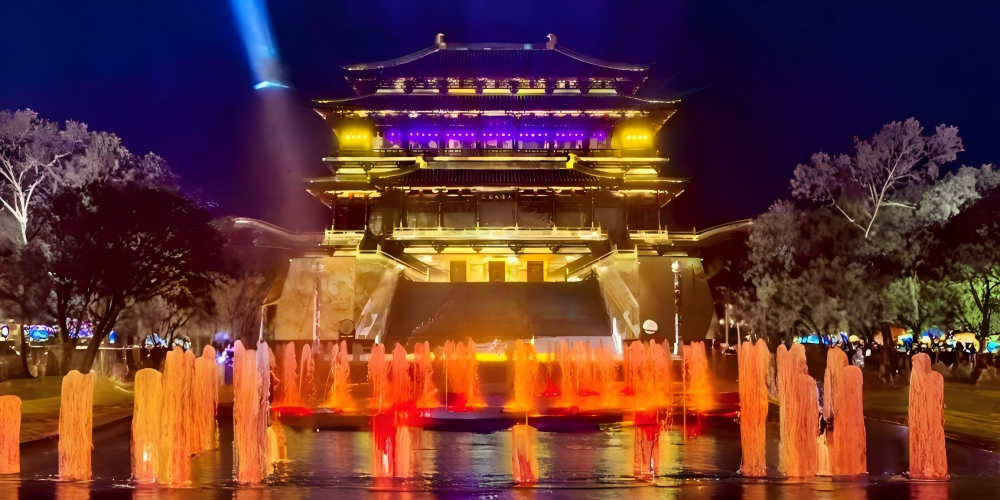
Tang Paradise《Dreams of Tang Dysasty》
The Tang Paradise showcases exquisite craftsmanshipwillVisitors stand on the lake surfaceThis innovative approach to cultural tourism performances seamlessly integrates with the surrounding performance environment.Nightlife redefined: A visual feast of the Tang DynastyA pool of winding river water, a thousand-year dream of the glorious Tang Dynasty.”Dreams of the Tang Dynasty” uses the “culture and customs of the prosperous Tang era” as its foundation and”Qujiang Banquet”An original work featuring”Vision”with the concept of”Dreamland”As the theme, through advancedTechnologyandHistory & CultureA perfect fusion of light and shadow creates a unique dreamlike cruise experience, transporting travelers into the dreamscape of Chang’an for an immersive Tang Dynasty audiovisual feast.The entire performance showcasesRaising the bar in the travel industry,Pioneering a new force in the nightlife marketWith unstoppable momentum, we’re committed to showcasing the dazzling and magnificent Tang Dynasty song and dance culture to the world!Cutting-edge technology creates stunning stage effectsSet against the enchanting backdrop of Tang Paradise’s radiant pavilions, bridges, and shimmering waters, “Dreams of the Great Tang” transforms the natural scenery into a grand stage. This spectacular show blends modern sound, lighting, and digital technology with historical, folk, and cultural elements to recreate the never-sleeping Chang’an. It vividly portrays the poetic vision of Tang Dynasty literati, the artistic sentiments of painters, the inclusive culture, and the majestic imperial aura that still captivates us today. With the illuminated Ziyun Tower as its centerpiece – now more breathtaking than ever after recent upgrades – the water dance and light show immerses visitors in profound cultural ambiance. The magnificent nightscape creates a timeless atmosphere where every step feels like a journey through history.Cruise with live performances and panoramic mobile experienceThe seating area features”Cruise performance experience” format, with a total ofFive cruisesEach cruise can accommodate160 people, total800 seatsBased on the on-site park conditionsLive scenery, fountains, projections, and immersive surround soundWith cutting-edge performance equipment, we’ve created a brand-new immersive water screen show. Visitors can enjoy the ancient charm of both riverbanks while watching the performance, and the audience and cruise become part of the view, offering a truly delightful experience.
-
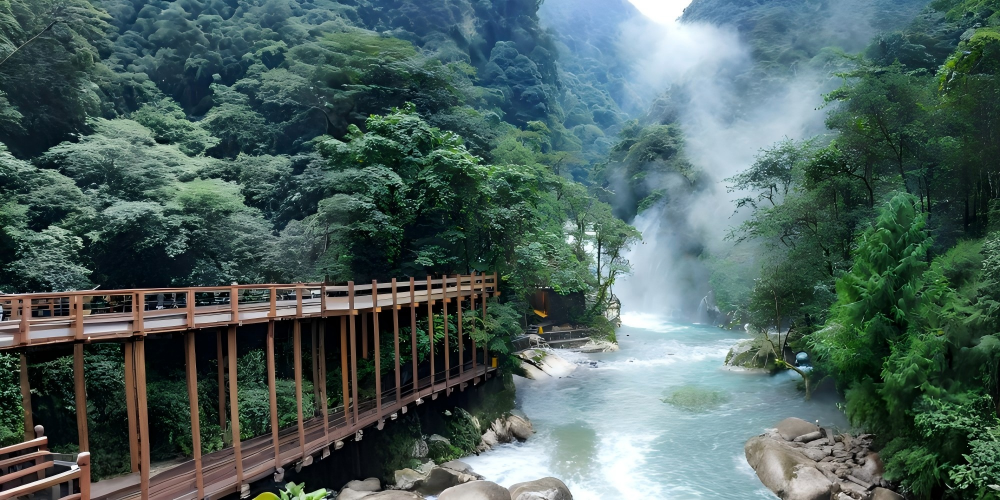
Xingqing Palace Park
Xingqing Palace Park was built on the site of Xingqing Palace in Tang Dynasty. It is the city park of Xi’an University and an ancient historical and cultural site park in my country. Opposite the park is Xi’an Jiaotong University, a famous school with a century of history. Xingqing Palace was the main place where Emperor Xuanzong of the Tang Dynasty handled the state affairs, and also the residence of Emperor Xuanzong and Yang Guifei. After the Anshi Rebellion, it became the residence of the Emperor Taishang. The design of Xingqing Palace Park has both traditional Chinese architectural and cultural styles, and draws on the characteristics of foreign gardening. With Xingqing Lake as the center, according to the orientation of the original Xingqing Palace, Chenxiang Pavilion, Calyx Xianghui Building, Nanxun Pavilion, Attractions such as Changqingxuan, the garden is widely planted with different scenery in four seasons. Especially in spring, various flowers are displayed, attracting many tourists to watch. This kind of palace carrying a heavy history not only tells the world its thousand-year vicissitudes and beautiful legends, but also shows its new vitality and charm to the world with a new attitude.
-
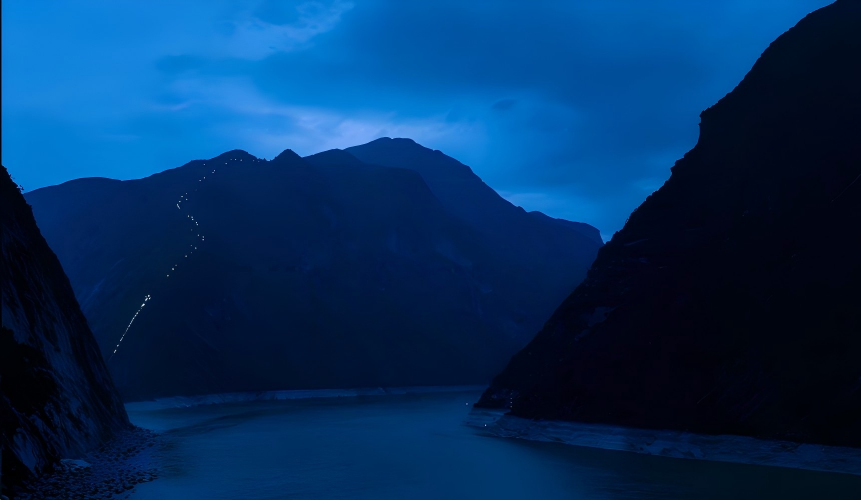
Mount Li
The events of “Fooling the Lords,” a famous story from Chinese history, took place on this mountain. The mountain is divided into the eastern and western ridges. The main sights lie along the western ridge, and include the Beacon Tower in the story “Fooling the Lords,” and the Bingjian Pavilion commemorating the Xi’an Incident. The Beacon Tower lies at the mountain peak, and is therefore the highest scenic spot on the mountain. The Bingjian Pavilion is where Chiang Kaishek was discovered hiding during the Xi’an Incident of 1936. At the foot of Lishan lies the famous Huaqing Pool. The view looking down over Huaqing Pool from the Sunset Pavilion on the mountain at dusk is known as “Sunset at Lishan,” and is one of the famous sights within the Hangu Pass.
-
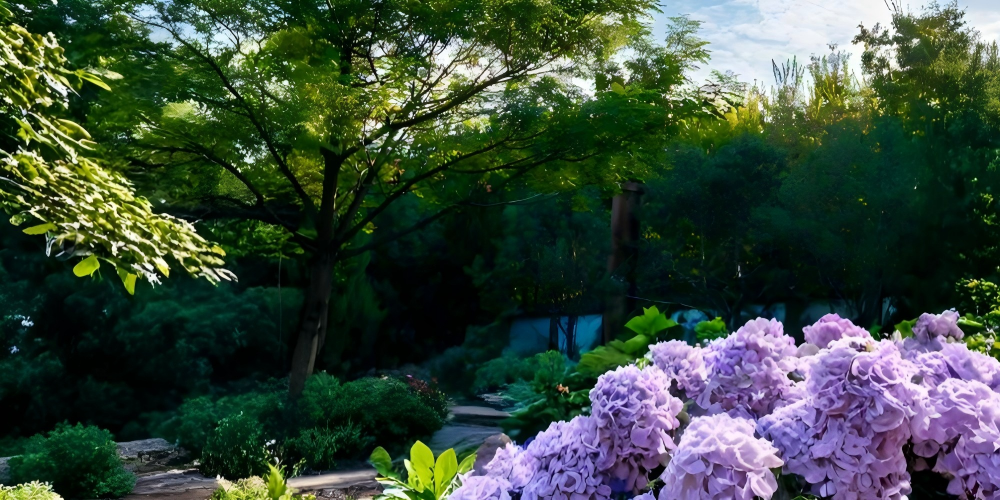
Small Wild Goose Pagoda Heritage Park
The site of Jianfu Temple within the Small Wild Goose Pagoda Heritage Park forms the core component and outdoor area of Xi’an Museum. It earned its name because its pagoda shape resembles the Giant Wild Goose Pagoda but is smaller. Compared to the bustle of the Giant Wild Goose Pagoda, this place offers much more tranquility. At the base of the pagoda, exquisite stone carvings from various dynasties are displayed outdoors, including Buddhist statues, stone lions, stone horses, and hitching posts—a must-see for visitors who appreciate folk artifacts. This multi-eaved brick pagoda originally had 15 stories but now stands with 13, reaching about 43.4 meters in height. With its elegant and slender silhouette and smooth contour lines, it is a classic example of Tang Dynasty square multi-eaved pagodas. As one of Xi’an’s important symbols of its ancient capital heritage, it holds the prestigious title of “Morning Bell at the Wild Goose Pagoda,” one of the “Eight Scenic Wonders of Guanzhong.” Jianfu Temple was originally built in 684 AD during the first year of Emperor Ruizong’s reign in the Tang Dynasty, initially dedicated to honoring Emperor Gaozong. Later, between 707–710 AD during Emperor Zhongzong’s reign, a pagoda was constructed within the temple to house Buddhist scriptures and statues brought back from India by the eminent monk Yijing.This is the tower named for its distinctive shape.Therefore, it is inseparable from the Jianfu Temple and serves as a physical witness to the temple’s former glory and a landmark structure. After enduring the vicissitudes of time, most of the Jianfu Temple’s halls and buildings no longer exist.But thisPrecious Tang Dynasty architectural relics have been preserved to this day.
-

The Guangren Lama Temple
Guangren Temple in Xi’an is the only Tibetan Yellow Sect (Gelug sect) in Shaanxi. It was built in 1703 by Emperor Kangxi, the sage of the Qing Dynasty, and the plaque “Guangren Temple” was personally inscribed. After Guangren Temple was built, living Buddhas and Lamas from Tibet, Mongolia, Qinghai, Gansu and other regions all stayed at the temple to pay their respects when passing through Shaanxi. Guangren Temple is also the only main dojo of “Green Tara” in China. Green Tara is said to be the incarnation of Guanyin Bodhisattva in Lamaism. After entering the gate of Guangren Temple, there are buildings such as the Daxiong Hall, the Hall of Tibetan Scriptures, and the Triple Hall of the Fatang on the central axis. When you step into the Mahavira Hall, you will find that what is enshrined in the hall is not the common Sakyamuni Buddha statue, but a 2-meter-high gilded bronze statue of Tara, a majestic and exquisite gilt bronze statue. To the left of the green Tara is The statue of the goddess in wooden bun and the wooden giant light statue on the right are all cultural relics of the Tang Dynasty. The whole hall is surrounded by 40 prayer reels, full of Tibetan Buddhist monastery style. Although Guangren Temple is not big, there are many things to see. In addition to the Green Tara Buddha statue in the Mahavira Hall, you can also see the “Imperial Guangren Temple Stele” in the temple. The inscription on the inscription was written by Kangxi and recorded the process of building the temple; The original has been preserved for more than 300 years. The rice paper has turned yellow for a long time, but the handwriting is clear and dignified, and it is a masterpiece of calligraphy. In front of the second hall in the temple, you can see a white marble lotus jar, which is carved from a piece of white marble. The outside of the jar is carved with brocade, and the inside of the jar has an inscription in official script carved during the Qianlong period, commonly known as “Qianlong orchid jar”. In front of the scripture hall, there is also a “lotus throne carved from white marble”. Legend has it that the Buddha statue of Sakyamuni on the throne was brought to Tibet by Princess Wencheng. In addition, there are also a pair of Nanmu dragon lanterns presented to Guangren Temple by the Empress Dowager Cixi when she traveled west, the plaque of “Ciyun Xiyin” inscribed by Emperor Kangxi, the plaque of “Dharma Xiang solemn” inscribed by Cixi’s imperial inscription (hanging in the Thousand Buddhas Hall), There are a number of precious plaques such as the plaque of “Buddhist Holy Land” inscribed by Qianlong and the plaque of “Solemn Buddha Land” inscribed by Kang Youwei.
-

YongxingFang
Yongxing Lane is another destination for snacks in Xi’an City other than Huimin Street. It was one of the 108 lanes of Chang’an City in the Tang Dynasty. Nowadays, it is a place filled with local food shops in Xi’an. Many tourists would come here to enjoy local cuisine, including meat sandwiches and rice husks.
-
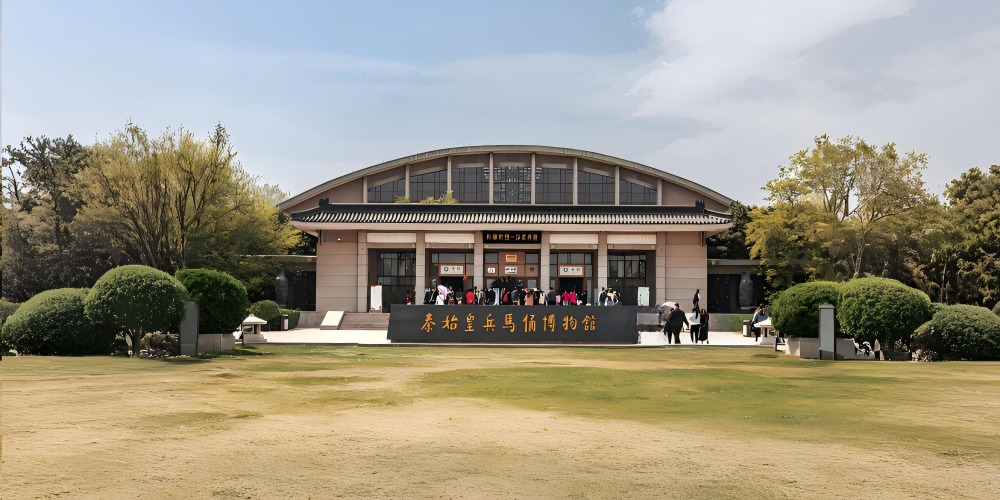
Emperor Qinshihuang’s Mausoleum Site Museum
Emperor Qinshihuang’s Mausoleum Site Museum, also known as the Terracotta Army, is located about 1.5 kilometers east of the Mausoleum of the First Qin Emperor and forms part of the extensive necropolis. There were more than a thousand terracotta soldiers unearthed here, each with a different facial expression. Standing before the massive underground army, you will feel the extraordinary might of the Qin Emperor that enabled him to unify six warring states two thousand years ago. The Qin Emperor Ying Zheng began building the mausoleum for himself at the age of 13. Nearly 720000 men and 38 years were required to complete this vast project.