
History background:Shaanxi History Museum is located in the northwest of the Dayan Pagoda in Xi’an. It is one of the landmark attractions of Xi’an. The museum was planned in 1983, started in the summer of 1986, and officially opened on June 20, 1991. It was named Shaanxi History Museum. In 2016, Shaanxi History Museum was selected as “China’s 20th Century Architectural Heritage” by the Chinese Cultural Relics Society and the Chinese Architectural Society.Museum Features:Shaanxi History Museum is a large modern museum, and its completion marks a new milestone in the development of China’s museum industry. This museum is a Tang-style building complex with a “central hall and four corner towers”. The main and secondary buildings are well-organized, the heights are staggered, and the momentum is solemn. It integrates national traditions, local characteristics and the spirit of the times.The museum covers an area of 65,000 square meters, and houses more than 380,000 cultural relics ranging from simple stone tools used in the initial stage of ancient humans to various artifacts in social life before 1840, covering a time span of more than one million years. The cultural relics are not only numerous and diverse, but also of high quality and wide value. The collections in the museum are dazzling and exquisite. It is an art hall that showcases the history and culture of Shaanxi and ancient Chinese civilization, and is known as the “Pearl of the Ancient Capital, the Treasure House of China.”There are many treasures in the museum, including bronzes from the Shang and Zhou dynasties, pottery figurines from various dynasties, gold and silver utensils from the Han and Tang dynasties, and murals from Tang tombs. Most of them are treasures from the prosperous periods of the Han and Tang dynasties, and some of them are fine items that are prohibited from leaving the country.Collection treasures:There are three exhibition halls in the center of the museum. The first exhibition hall displays cultural relics from the prehistoric civilization of Lantian ape-man 1.15 million years ago to the Qin Dynasty; the second exhibition hall displays cultural relics from the Han Dynasty and the Wei, Jin, Southern and Northern Dynasties; and the third exhibition hall is mainly cultural relics from the prosperous Tang Dynasty. Each exhibition hall has its own treasure.There are special exhibition halls on the east and west sides of the central hall. On the west side, there is a “Special Exhibition of Tang Dynasty Treasures (Treasure Hall, Cultural Relics Unearthed in Hejiacun)”, where many fine gold and silver wares from the heyday of the Tang Dynasty were transferred to be exhibited. On the east side, there is a “Treasures of Tang Dynasty Murals Exhibition”, which exhibits a number of authentic Tang Dynasty tomb murals.The tripodThe tripod is placed in the first exhibition hall at the entrance of the museum, and it can be said to be the treasure of the first exhibition hall. The replica is placed here, and the original is kept in the warehouse. Inscription on the outer wall: The inscription “All under heaven is the king’s land; all the people are the king’s subjects” reflects the land ownership system in the Western Zhou Dynasty.There are four lines of inscriptions with 28 characters on the inner wall of the Yi Ding. The general meaning is: In early August of a certain year, Wang Jiang took back the land originally given to Shi Lu and gave it to Yi, who then made this tripod to commemorate it.Queen’s Seal:One of the treasures worth seeing in the second exhibition hall is the jade seal of the empress of the Han Dynasty, which is displayed separately. The seal is made of Xinjiang Hetian mutton-fat jade and is engraved with a Chihu, symbolizing royal power.Three-color camel figurines carrying music:This world-famous tri-color camel figurine carrying music is located in the third exhibition hall of Shaanxi History Museum. Its overall appearance and color are well preserved. There are seven men sitting on the camel’s back, holding different musical instruments in their hands. Among them, the figurine holding the clapboard is listening attentively, as if intoxicated by the wonderful music. The woman in the middle is performing, and the camel opens its mouth wide and looks up to the sky, as if it is also singing with its master.Gold-inlaid animal head agate cup:This cultural relic, located in the special exhibition “Tang Dynasty Relics Special Exhibition”, is one of the first 64 national treasures listed by the State Administration of Cultural Heritage that are never allowed to be exhibited abroad.There are also many other treasures such as black-glazed oil-drip bowls, green-glazed porcelain pots with handles, gilded silver bamboo-joint copper incense burners, gold bowls with mandarin duck and lotus petal patterns, and so on.
归档: Attractions
-
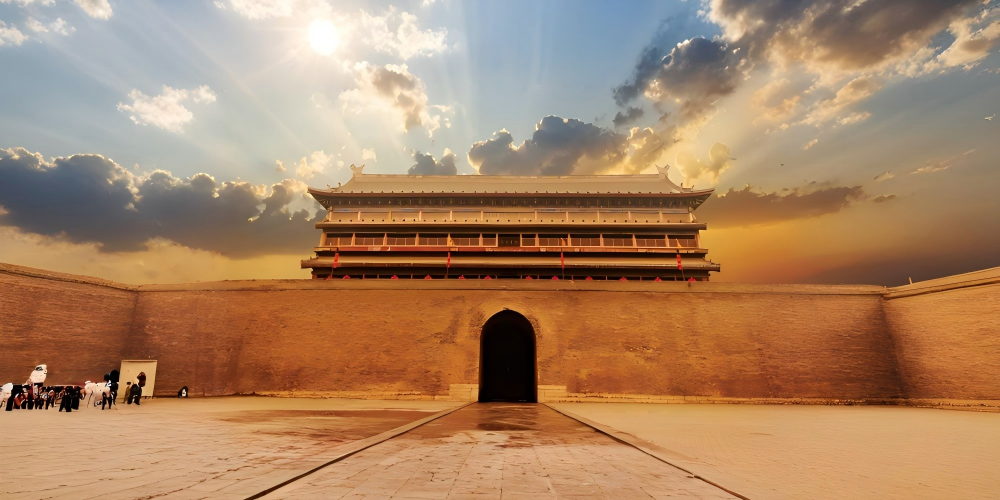
Xi’an City Wall
Xi’an City Wall is a landmark of this ancient city. The city walls that we see now were built in the early years of the Ming dynasty and they are now more than 600 years old. The walls were built on the foundations of the imperial city of the Tang Dynasty and they are formed together with a series of defensive installments such as moats and turrets. At present, Xi’an City Wall can be accessed by many city gates. Visitors can choose the nearest one to them. The South Gate is the visitor entrance of Xi’an City and is also the city gate with more tourists. Cycling on the ancient walls is a good experience. Riding on the wall overlooking the ancient capital of the thirteenth dynasty, you will have a feeling of travelling through time.
-
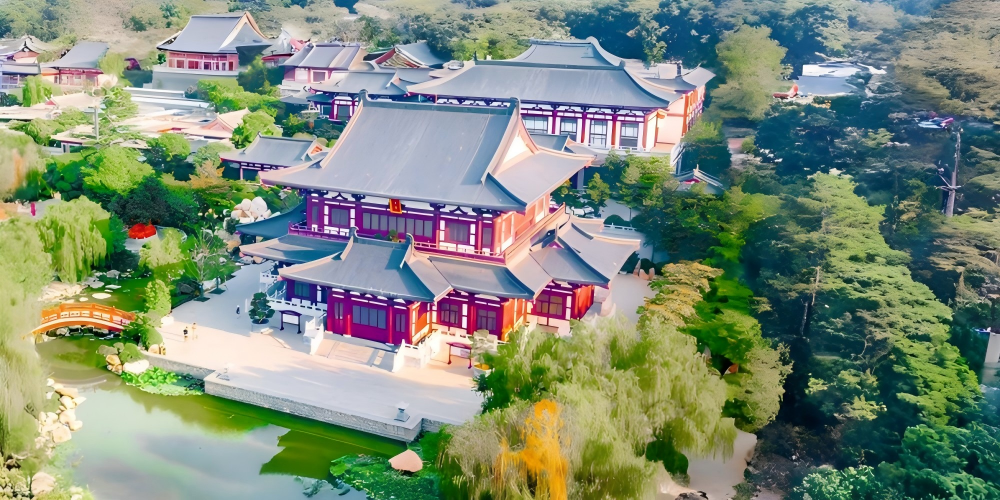
Huaqing Palace
Huaqing Palace attraction is located 30 km east of Xi’an, adjacent to the Terracotta Warriors. Renowned for its timeless hot spring resources and numerous historical events, it has become an iconic cultural tourism attraction of Tang Dynasty palaces in China.Palace scenic spotsHuaqing Palace boasts a long history, serving as an imperial retreat for emperors from the Zhou, Qin, Han, Sui, and Tang dynasties. The palace features cultural zones like the Tang Imperial Hot Spring Relics Museum, the Xi’an Incident site—Five-Room Hall, Nine Dragon Lake and Lotus Lake scenic areas, and the Tang Pear Garden Museum. Notable architectural complexes include Feishuang Hall, Wanshou Hall, Changsheng Hall, Huanyuan Garden, and Yuwang Hall.The stele of “hot spring ode”Mount Li hot springs, developed early and favored by emperors throughout history, enjoy the reputation of being “the imperial hot springs under heaven.” As far back as the Yangshao culture period 6,000 years ago, the ancient Jiangzhai people began utilizing these springs. With their profound cultural heritage spanning millennia, Mount Li hot springs represent an indispensable part of Chinese historical culture.The stele of hot spring ode in the attraction stands 154 cm tall, 72 cm wide, and 19 cm thick, featuring a coiled dragon design and a trapezoidal base. Engraved by Yuan Chang, the governor of Yongzhou during the Northern Wei Dynasty, the inscription reads, “The hot spring is nature’s prescription and the primordial healer of the universe. People from all nations and those suffering from ailments come with provisions to seek relief in its waters.” This stele is the earliest surviving written artifact at Huaqing Palace.Tang Imperial Hot Spring Relics MuseumThis is the site of the bathing pool described in the “Song of Everlasting Sorrow” where Yang Guifei emerged from her bath. After the An Lushan Rebellion, little remained of the original structure. In 1982, while constructing the “Guifei Pavilion,” the Lintong County Government accidentally discovered the ruins of a Tang Dynasty bathing pool. After excavation and restoration, the Huaqing Palace imperial hot spring ruins museum was established. This small yet exquisitely designed pool measures 3.6 meters east-west and 2.9 meters north-south, with an oval-like shape. The pool walls are entirely built with bluestone slabs, featuring a two-tiered terrace structure composed of 18 arched stone sections. Inside the pool lies a dedicated bathing stone for Yang Guifei, engraved with the character “Yang.” At the center of the pool bottom is a 10 cm diameter water inlet. A white marble lotus pedestal was unearthed here, connecting to both a showerhead above and ceramic water pipes below that linked to the main water source. Due to natural pressure, hot spring water would spray outward through the lotus showerhead, creating a mist effect remarkably similar to modern showers. Adjacent to the Guifei Pool to the east lies Emperor Xuanzong’s exclusive imperial hot spring. During the Tang Dynasty, the Nine Dragon Hall stood above this pool, featuring nine white jade-carved dragons spouting water outside. This pool’s surface resembles a realistic lotus shape, hence its alternate name “Lotus Pool.”Xi’an incident siteThe five-room hall at the Xi’an incident site in Huaqing Palace is where the Xi’an incident took place. To this day, the glass windows and walls of the five-room hall still bear bullet marks from the fierce battle during the military remonstrance. The desks, chairs, beds, sofas, tea sets, stoves, carpets, telephones, and other office items in each room are replicated and arranged according to their original appearance.Historical events:Beacon fire to deceive the feudal lordsIn 779 BC, King You of Zhou obtained the beautiful Bao Si, yet she never smiled. To solve this, the king conspired with the treacherous minister Guo Shifu and lit the beacon fires at the Huaqing Palace attraction. The feudal lords across the land saw the signals.Beacon fireHe quickly led his troops to rescue the king, but King You told the feudal lords, “I lit the beacon fires just to make my queen laugh,” upon which Bao Si burst into laughter. The feudal lords arrived valiantly but left resentfully. Seeing King You’s incompetence and the people’s discontent, the Quanrong tribe seized the opportunity to launch an attack. As the enemy troops approached the mountain, King You urgently raised the beacon fires.Beacon fireHe mobilized troops, but none of the feudal lords came to his rescue. King You fled with Bao Si toMount LiHe was later killed by the Quanrong tribe, leaving behind historical anecdotes such as “a smile worth a thousand gold,” “losing the kingdom for a smile,” and “playing with beacon fires to deceive the feudal lords.”And this beacon tower at Huaqing Palace attraction towers at an altitude of 913.6 m.Mount LiThe beacon tower at Huaqing Palace attraction on the first peak of Xixiu Ridge.Su Dongpo composing poetry at Mount LiDuring the Jiayou era of the Northern Song Dynasty, the Lishan hot springs, meticulously restored by Liu Ziyong and others, became breathtakingly beautiful, attracting crowds of visitors who composed poems and essays to express their nostalgia. Among the countless poetic works, the emerging literary giant Su Shi stood out with his masterpieces like “Lady of Guo’s night outing” and “Lishan” during his visit to the hot springs.Xi’an incidentThe Xi’an incident, also known as the “double-twelfth incident”. Zhang Xueliang and Yang Hucheng launched a mutiny at Huaqing Palace, detaining the then chairman of the Military Commission of the National Government.Performance itemsYou can watch a large-scale dance drama at the attraction.▲ The Song of Everlasting Sorrow is China’s first large-scale live historical dance drama created by Shaanxi Tourism Group. Based on Bai Juyi’s timeless poem of the same name, it fully utilizes the attraction’s resources and employs high-tech stage lighting to combine historical storytelling with live performances, recreating the love story of Emperor Li Longji and Yang Guifei at Huaqing Palace over 1,300 years ago.▲There is also the historical adaptation “12-12 Xi’an Incident,” which vividly and authentically recreates the lesser-known details of the “Xi’an Incident.”
-
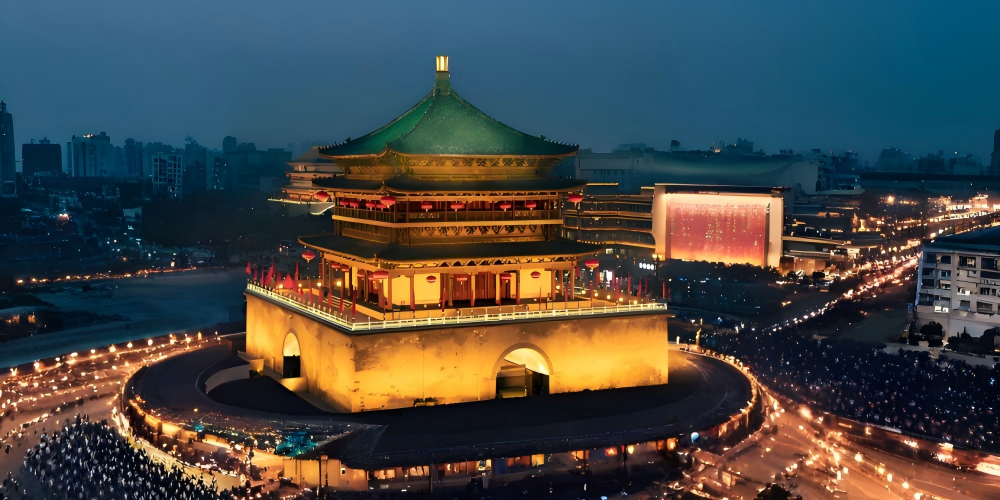
Xi’an Bell Tower
Xi’an Bell Tower is one of China’s largest and best-preserved bell towers, originally built in the 17th year of the Hongwu era during the Ming Dynasty (1384 AD). Located at the heart of Xi’an, this iconic landmark serves as the central point from which four major streets radiate east, south, west, and north, each connecting to the corresponding gates of Xi’an’s ancient city walls.Xi’an’s Drum Tower was originally located on Guangji Street in the west. As the city center shifted eastward, during the 10th year of Emperor Shenzong’s Wanli era in the Ming Dynasty (1582), the Bell Tower was relocated to its current position east of the Drum Tower.The Bell Tower showcases a typical Ming Dynasty architectural style, featuring a square brick-and-stone base at the bottom and a triple-eaved pyramidal roof structure at the top, covered with dark green glazed tiles and gilded with real gold foil. Each side of the base has a central arched gateway approximately 6 meters high, which originally interconnected to serve as passageways for the intersection of East, South, West, and North Streets, allowing pedestrian and vehicular traffic. Today, the gateways are sealed off, with a traffic roundabout built around the tower and an underground pedestrian passageway for public use.The entrance to the Bell Tower is inside this underground passage, with a spiral staircase leading up. Inside the tower, there is a replica of the “Jingyun Bell.” The original was cast in the second year of Emperor Ruizong of Tang’s Jingyun era (711 AD) and is now housed in the Xi’an Beilin Museum.Standing atop the Bell Tower, you can see the four main streets extending east, south, west, and north. Surrounding the tower lies Xi’an’s bustling commercial district, with the Drum Tower nearby.Visitors can enjoy wonderful ancient-style performances while visiting the Bell Tower, with 6 daily shows. Check the official website for specific performance times. Between the Bell Tower and Drum Tower lies the Bell and Drum Tower Square, featuring a musical fountain.
-
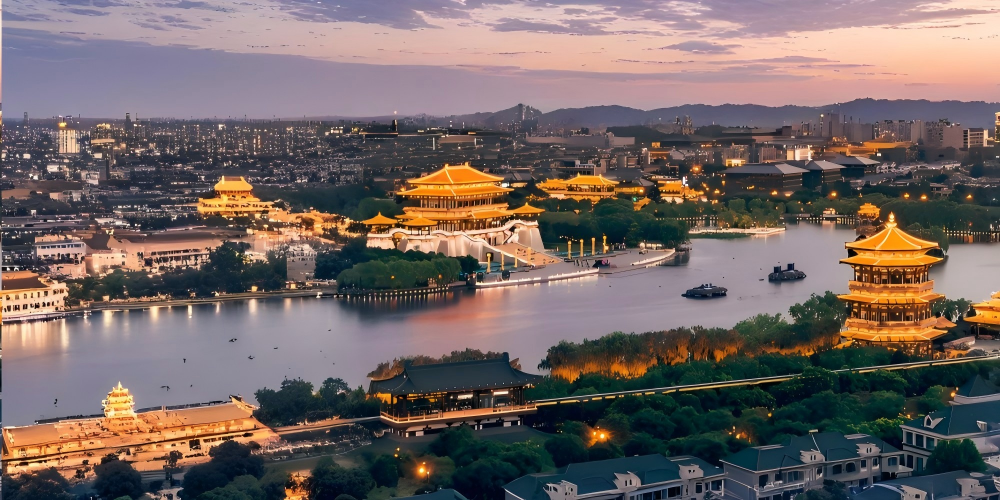
Tang Paradise
Tang Paradise, a national 5A attraction, is located in Qujiang New District in the south of Xi’an City, not far away from the Big Wild Goose Pagoda. It covers an area of 998 acres, including 300 acres of water area, 440 acres of green space, and a construction area of nearly 100,000 square meters. The overall planning and architectural design of the park’s architecture is by Mr. Zhang Jinqiu, an academician of the Chinese Academy of Engineering, and the garden landscape design is by Mr. Hiroshi Akiyama, a Japanese garden master. It is a large-scale cultural theme heritage park that comprehensively displays the style of the prosperous Tang Dynasty. Since its official opening to the outside world on April 11, 2005 (the third day of the third lunar month), it has been committed to creating high-quality, high-standard brand tourist attractions.Tang Paradise aims to build “a garden of history, a garden of spirit, a garden of nature, a garden of humanity, and a garden of art”. It specially invited more than ten Tang historians, Tang poems, Tang paintings, etc. from the China Tang Dynasty Literature Society. An expert group composed of Tang construction experts, doctoral supervisors, researchers and tourism experts re-excavated and sorted out the historical and cultural content of Tang Paradise, re-planned and positioned the entire garden landscape, and divided into fourteen ares including the imperial cultural area, female Cultural area, poetry culture area, imperial examination culture area, tea culture area, song and dance culture area, food culture area, folk culture area, diplomatic culture area, Buddhist culture area, Taoism culture area, children’s play area, gate landscape culture area and water show performance area, fully reproduce the splendid civilization of the Tang Dynasty. There are more than 20 scenic spots such as Ziyun Tower, Ladies Pavilion, Lu Yu Tea House, Apricot Garden, Caixia Corridor, Qujiang Drinking, Beauty Walk, Tang Poetry Gorge, Dogwood Terrace, etc. It displays the Tang Dynasty’s dazzling spiritual outlook and splendid and unparalleled culture and art. It is known as a tourist attraction that “shocks the Chinese people and amazes the world”.The theme performance of the attraction is the large-scale water dance light and shadow show “Chasing Dreams of the Tang Dynasty”, and you can take a boat trip to the dreamy holy land; the large-scale super-dimensional situation dance drama “Dreams of the Tang Dynasty” is majestic and dreamlike; the palace Yan music of the Tang Dynasty “Drums” performs Dongcang drum music, an intangible cultural heritage of mankind, as well as high-quality cultural tourism activities such as the New Year Festival, Shangsi Festival, and Qujiang Flower Moon Banquet. Brands and projects. The multiple Complimentary attractions and exciting performances every day are a warm invitation from the Tang Dynasty royal family to tourists, allowing them to experience the sacred and grandeur of royal culture in a shocking way.As a theme heritage park with excellent quality, full of personality and rich cultural connotation, Tang Paradise is a cultural window for Xi’an to show the world the ancient historical heritage of Chang’an and the prosperous Tang Dynasty, and a cultural gateway to attract the world to understand China…
-
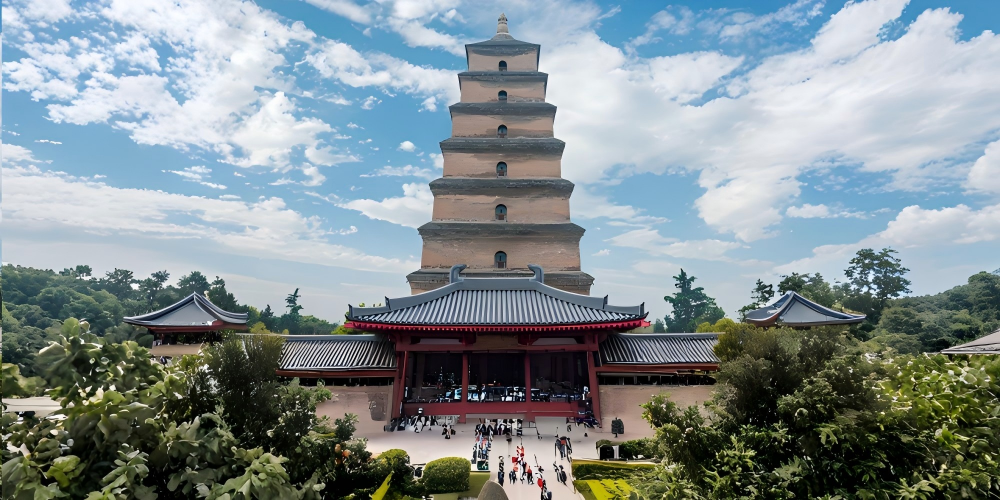
Giant Wild Goose Tower Cultural Leisure Scenic Area
The Big Wild Goose Pagoda Cultural and Leisure Scenic Area in Xi’an has become a famous tourist destination in Xi’an with its unique historical and cultural charm and rich leisure and entertainment elements. The Big Wild Goose Pagoda Cultural and Leisure Scenic Area is not only a tourist destination, but also a platform for cultural inheritance and exchange. Various cultural activities are sometimes held here, allowing tourists to feel the unique charm of Shaanxi’s regional culture while enjoying the beautiful scenery. It also attracts many literati, artists and cultural enthusiasts to participate, injecting new vitality and cultural connotations into the scenic area, allowing tourists to experience Shaanxi’s folk culture in all aspects. At the same time, there are many dining, shopping and leisure places around the scenic area, providing tourists with convenient services and rich leisure experiences, allowing people to enjoy the convenience and comfort of modern life while feeling the historical culture.
-
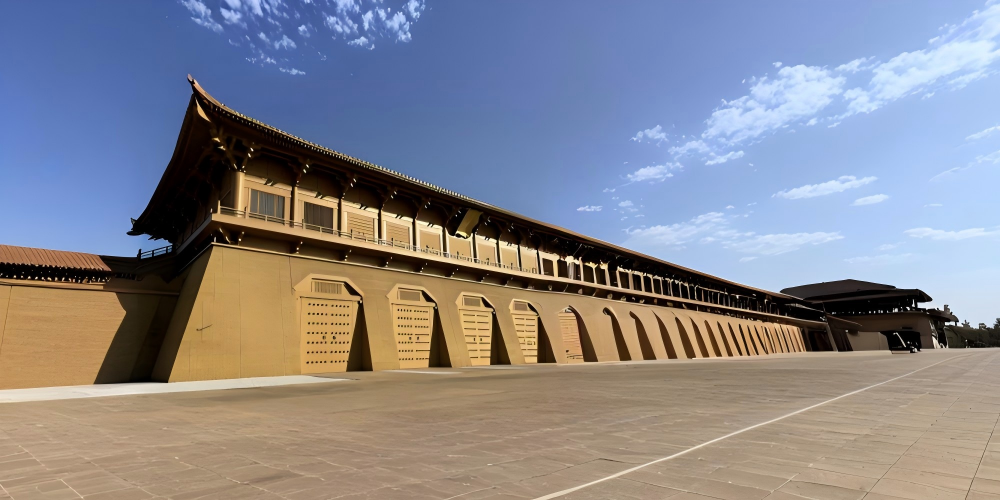
Daming Palace National Heritage Park
The Daming Palace, the grand imperial court of the Tang Empire, served as the political center and national symbol of the dynasty. As one of the “Three Great Palaces” (Daming Palace, Taiji Palace, and Xingqing Palace) in Chang’an, it was the largest and known as the “Eastern Palace.” From Emperor Gaozong’s reign onward, 17 Tang emperors conducted state affairs here for over 240 years. This magnificent architectural complex stood as one of the world’s most expansive palace compounds during its time.The lines from poet Wang Wei’s “Morning Court at Daming Palace in Response to Jia Sheren” – “The nine heavens’ gates swing open to reveal the palace; envoys from myriad nations bow before the imperial crown” – epitomize the grandeur of Tang Dynasty’s golden age, showcasing the empire’s majestic authority and the solemn magnificence of imperial ceremonies.The Daming Palace was first built in the 8th year of Emperor Taizong’s Zhenguan era (634 AD), covering an area of approx. 3.2 km². The entire palace complex can be divided into two main sections: the outer court for official assemblies and the inner court for residence and entertainment. The outer court centers around the Hanyuan Hall (outer court), Xuanzheng Hall (middle court), and Zichen Hall (inner court), while the inner court features the Taiye Pool along with over 30 auxiliary halls, pavilions, and observatories.The term “Daming” first appeared in the “Daming” chapter of “The Book of Songs: Greater Odes.” According to the “Mao Commentary,” it signifies: “King Wen possessed brilliant virtue, so Heaven again commanded King Wu. As King Wen and King Wu succeeded one another, their brilliant virtue daily grew more vast, hence the name Daming.” Like the name Weiyang Palace, which also originates from “The Book of Songs,” Daming Palace served as a self-motivating symbol inspired by the diligent governance and wisdom of the Zhou kings.The origin of Daming Palace is also associated with a fascinating legend. During its initial construction, an ancient bronze mirror was unearthed at the site. The renowned statesman Wei Zheng recognized it as the “Qin Mirror,” a national treasure once used by Emperor Qin Shi Huang to eliminate political dissidents. Legend claims this mirror could reveal a person’s internal organs with astonishing clarity. More significantly, it could distinguish loyal ministers from treacherous ones and predict the rise and fall of dynasties. After Daming Palace’s completion, the Qin Mirror was hung in the imperial court to ward off evil spirits, giving rise to the idiom “a bright mirror hung high” (symbolizing impartial justice). With this treasure safeguarding the palace, the atmosphere became one of supreme integrity and enlightenment—hence the name “Daming Palace” (Great Illumination Palace).On March 4, 1961, Daming Palace was designated by the State Council of the People’s Republic of China as one of the first batch of National Key Cultural Relics Protection Units. In 2010, Xi’an established Daming Palace National Heritage Park on the original site. On June 22, 2014, the Daming Palace ruins were successfully inscribed on the UNESCO World Heritage List as part of the “Silk Roads: the Routes Network of Chang’an-Tianshan Corridor.” On October 18, 2021, the Daming Palace ruins were selected among the “Top 100 Archaeological Discoveries of the Century.”The Daming Palace of the Tang Dynasty was a magnificent architectural complex in Chang’an city. The park is built on the ruins of Daming Palace, where visitors can see foundation remains of palaces like Hanyuan Hall and admire the restored miniature model of Daming Palace.The attraction has a south gate and an east gate, with the south gate serving as the main entrance where the visitor center is located. Visitors are recommended to enter through the south gate. The heritage park consists of both free and paid sections, with the paid area covering the core attractions including the Danfeng Gate Ruins Museum at Daming Palace National Heritage Park, Hanyuan Hall Ruins, Xuanzheng Hall, Zichen Hall Ruins, and the Daming Palace Ruins Museum.The Daming Palace National Heritage Park – Danfeng Gate served as the main southern entrance to the Daming Palace, facing the 176m-wide Danfeng Gate Avenue. North of the Danfeng Gate lies the central north-south axis of the palace complex, featuring structures like the Hanyuan Hall, Xuanzheng Hall, Zichen Hall, Penglai Hall, Hanliang Hall, and Xuanwu Hall. Most other palace buildings were arranged along this central axis. According to Yonglu historical records, the Daming Palace’s architectural layout progressed from Danfeng Gate to Hanyuan Hall and then to Zichen Hall further north – all three major structures were built atop hills. The front court area occupied the highest point of Longshou Mountain, with the terrain dropping sharply by several meters beyond this section toward the northern slopes.The Hanyuan Hall, Xuanzheng Hall, and Zichen Hall were the three main halls of Daming Palace, with Hanyuan Hall serving as the principal throne hall. Flanking the Xuanzheng Hall were two key government offices – the Secretariat and Chancellery – along with the Hongwen Academy and Hongshi Archives. Parallel to the central axis, two longitudinal streets ran east and west, created by aligned gateways piercing through three transverse palace walls.The northern side of Longshou Hill served as the rear court, featuring low-lying terrain where water from the Longshou Village canal was diverted to form a lake—Taiye Pool. The emperor’s sleeping quarters and auxiliary halls were mostly concentrated on the elevated grounds of Longshou Hill southeast of Taiye Pool, while the areas for handling state affairs and hosting banquets with officials were situated on the high ground southwest of the pool. The expansive, flat northern shore of Taiye Pool accommodated recreational facilities and auxiliary views, such as the Shicui Hall, Horse Racing Tower, and Cockfighting Platform. The Linde Hall, built approx. during the Linde era of Emperor Gaozong of Tang, stood on the elevated land west of Taiye Pool in northern Daming Palace. As previously mentioned, there were also over 30 other detached halls, pavilions, and viewing platforms in the vicinity.At the attraction, visitors can view the foundation ruins of major halls and the palace outlines recreated with light steel structures on these ruins. Inside the Daming Palace National Heritage Museum, you’ll see artifacts unearthed from the site, including royal utensils and vessels. In the northeast corner of the museum, there’s a 1:15 scale miniature model of Daming Palace where you can “walk” along its streets and immerse yourself in the grandeur of Tang Dynasty’s imperial palace.Inside the Danfeng Gate Museum at Daming Palace National Heritage Park near the south gate, the ruins of the gate tower from the original Danfeng Gate of Daming Palace National Heritage Park are preserved. This site represents one of the largest documented city gates in Chinese history.
-
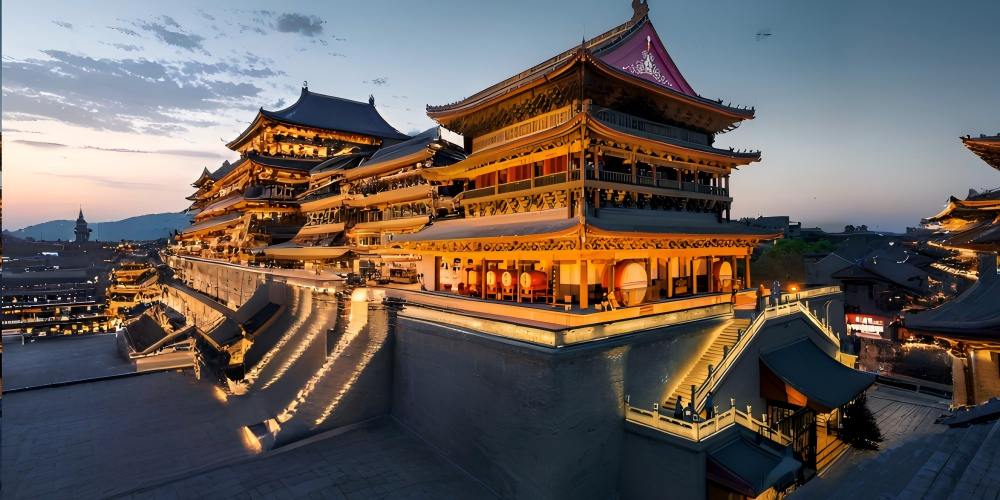
Xi’an Drum Tower
The Drum Tower in downtown Xi’an was built in the 13th year of Hongwu in the Ming Dynasty. It is over 600 years old. In ancient times, it was a time-keeping device. It is now one of the landmarks of the ancient city. On the south side of the Drum Tower, there is a plaque that says: “The Rich Land of Culture and Military”. This plaque, together with the “The First Gate of the World” plaque in Shanhaiguan, are known as the “twin plaques of China”. If you climb the Drum Tower, you can see a 1.8-meter-high drum. There are also 24 red drums engraved with 24 solar terms. They are very robust and impressive. To the north of the Drum Tower is theMuslim Quarter, which is a paradise for food enthusiasts.
-
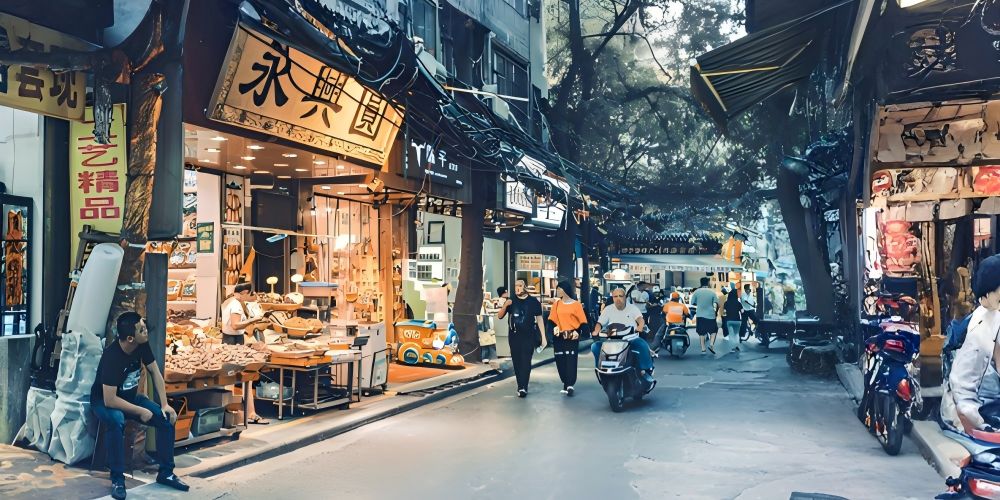
Xi’an Muslim Quarter
Huimin Street is an old Muslim neighborhood with a history dating back centuries ago. It has a distinct Muslim culture and a vibrant food culture, making it a paradise for food lovers. Huimin Street is not just a single street. It is a collective name for the whole Muslim District. It consists of Beiyuan Gate, North Guangji Street, Xiyangshi and Dapiyuan Street. It is also known as “Muslim Quarter” and “Fang Shang”. The district also houses a number of old local restaurants: Jia San Soup Buns and Lao Mi Jia Soaked Bread etc. You can also eat almost all of Xi’an delicacies here: various kebabs, bread and mutton soup, soup buns, spicy goat trotters, and cold skin noodles etc.
-
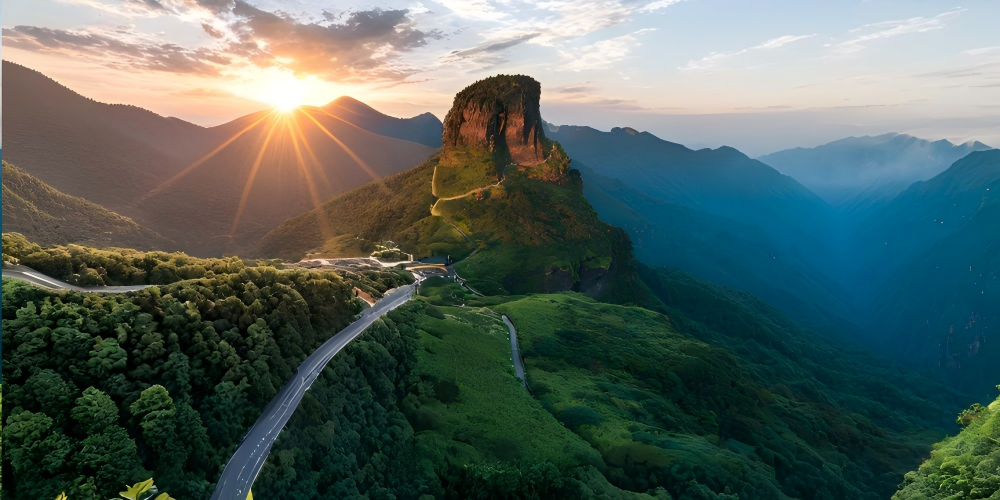
Fanjing Mountain Park
Fanjingshan Park is located at the intersection of Fanjingshan Avenue and Xiangshi Avenue in Jiangkou County. It is a leisure city park. The main landscapes include three major areas: Fanjingshan Cultural Square, Population Cultural Park, and Riverside Landscape.