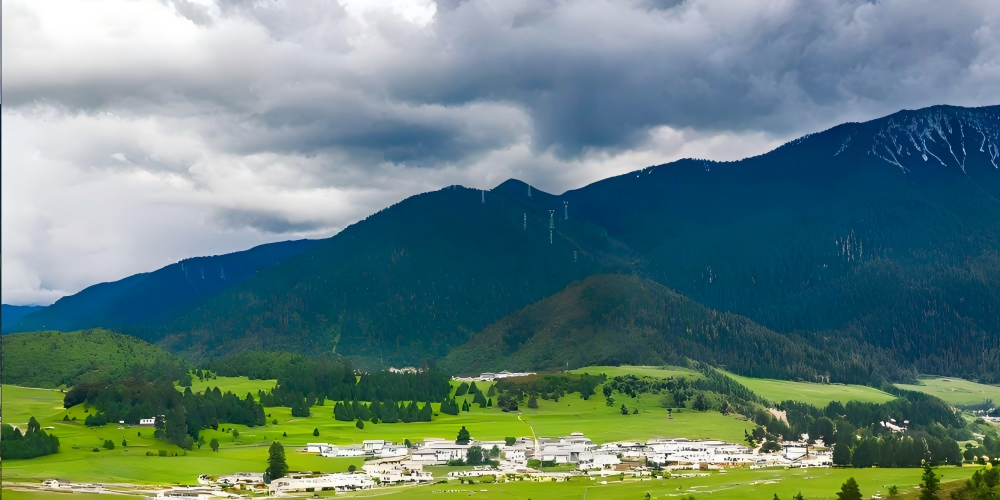
Lulang Forest is located in Lulang Town, the north of Bayi Town. There is an immense forest here, and the species of trees mainly include picea asperata and pinewood. The landscape is fresh and picturesque. It is also an ideal place for grand shoots. Lulang Forest covers a vast area. Visitors can enter the scenic area or the viewing platform on National Highway 318 for observation and shooting. When you pass by Lulang Town by driving on National Highway 318, you can enjoy an immense forest even without walking into the view platform.
归档: Attractions
-
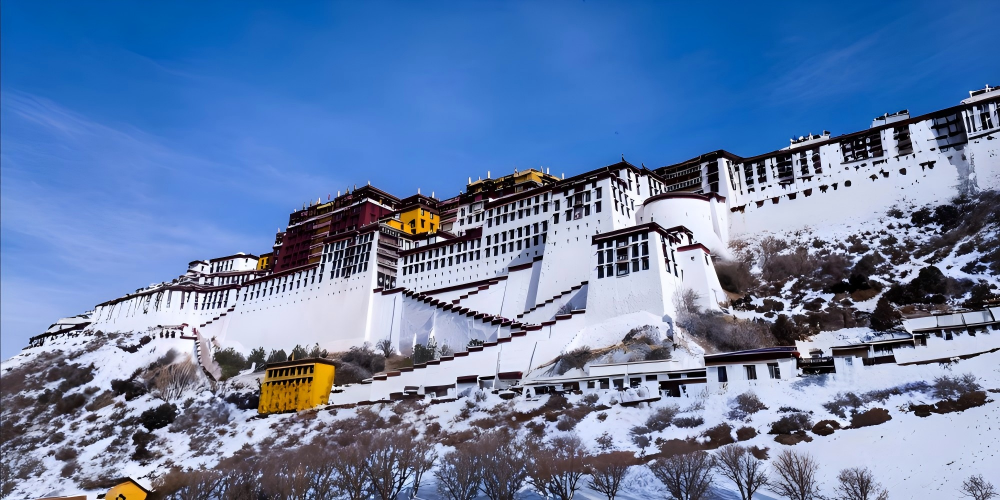
Potala Palace
The Potala Palace is the symbol of Xizang and a sacred place in the hearts of all pilgrims! “Potala” is a Sanskrit word, also translated as “Putuo”, which originally refers to the residence of Guanyin Bodhisattva. When you come here, you can not only view the large number of historical relics collected in the palace, appreciate the wonderful architectural art of the Tibetan people, but also have a baptism of the soul in that holy atmosphere. The origin of the Potala Palace According to historical records: In the 1930s of the seventh century AD, the 33rd Tibetan King Songtsen Gampo moved the capital to Lhasa and began to build the Potala Palace. Since then, major religious and political ceremonies have been held here, and it has become the ruling center of Xizang integration of politics and religion. The White Palace and the Red Palace The Potala Palace has a distinct Tibetan style and is majestic. It is the existing complete palace-style building complex in Xizang and is known as one of the world’s top ten earth buildings. Its main buildings are divided into two parts: the White Palace and the Red Palace. The White Palace is named after its white exterior wall. It is the place where the lamas live and conduct political activities. Because the sun shines all day long, it is called the East and West Sunlight Palaces. The Red Palace is located at the top center of the Potala Palace. Its outer wall is red and it consists of many stupas and various Buddhist temples. Historical relics The Potala Palace houses and preserves a large number of historical relics, including stupas, statues, murals, thangkas, scriptures and books, as well as gold books, jade books, gold seals granted by the emperors of the Ming and Qing dynasties, which show the historical relationship between the Xizang local government and the central government, as well as gold and silver wares, jade wares, porcelain, enamel and handicrafts. Among them, the eight stupas from the fifth generation are eye-catching. They are all magnificent and decorated with a dazzling array of gems, which can be called a palace of art.
-
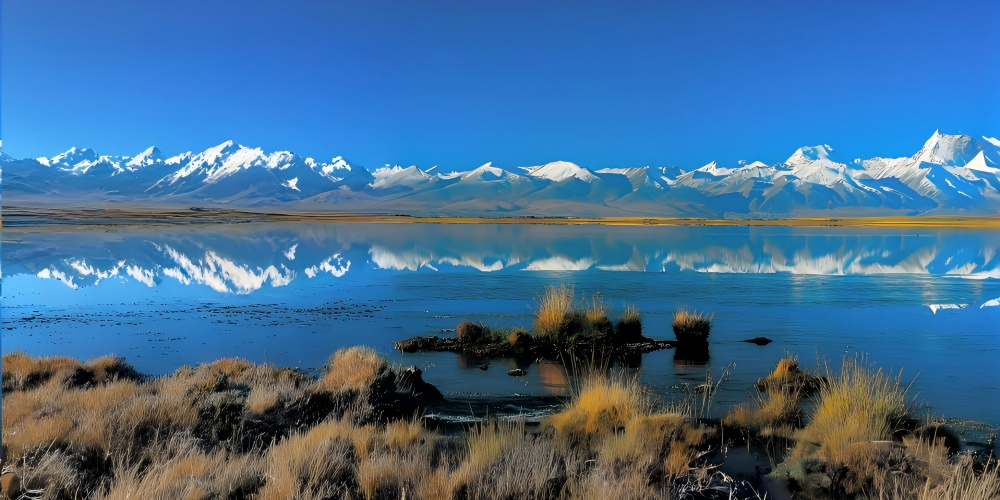
Namtso
Namtso is 240 kilometers from Lhasa. It is one of the three largest holy lakes in Tibet and is also a famous holy site for Tibetan Buddhism. The endless snow-capped mountain beside the lake is the Nyainqentanglha Mountain. On a beautiful day, the snow-capped mountains are reflected in the lake, giving a sense of peace and tranquility. There are numerous secular believers who come to Namtso every year on April 15 of the Tibetan calendar to celebrate the Saga Dawa Festival.
-
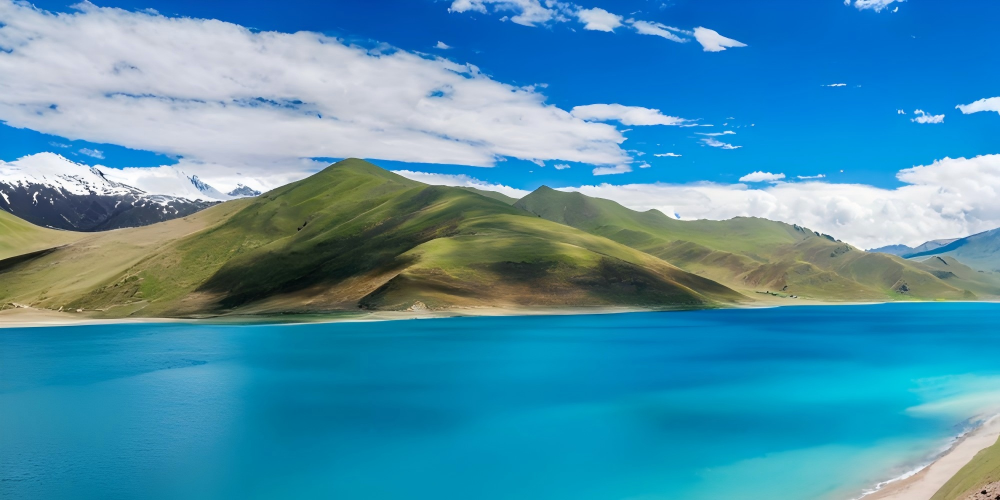
Yamdrok Yumtso
Yamdrok Yumtso, meaning “Swan Lake” in Tibetan, is one of Xizang’s three sacred lakes, also known as Yamdrok Lake (locals usually refer to it as “Yamdrok Yumtso”), because in Tibetan, “Tso” means “lake.” Geographically, it belongs to Nagarze County in the Shannan region. The lake surface is at an elevation of 4,441m, with a total shoreline of 250km and a total area of 638 square kilometers. The average depth of the lake is 20–40m, making it one of the larger inland lakes on the northern foothills of the Himalayas.Yamdrok YumtsoWith numerous branches resembling coral, it is called the “Upper Coral Lake” in Tibetan. The lake contains over 10 small islands, with the larger ones capable of accommodating five or six households, while the smaller ones are only about 100 square meters in size. The lake is rich in fish such as fine-scaled fish, Xizang schizothoracin, and plateau naked carp. It is also one of the larger waterbird habitats in southern Xizang. During winter, flocks of birds migrate here, and the lakeshore and central islands are teeming with swans, water pigeons, yellow ducks, fish eagles, and bar-headed geese. The view from afar is much more beautiful than up close. After crossing the 5,030-meter-high Gampa La Pass, it takes about 30 minutes to descend along the road to the lakeshore. This route offers excellent angles to admire the lake, with multiple viewing platforms along the way where you can stop and take photos.
-
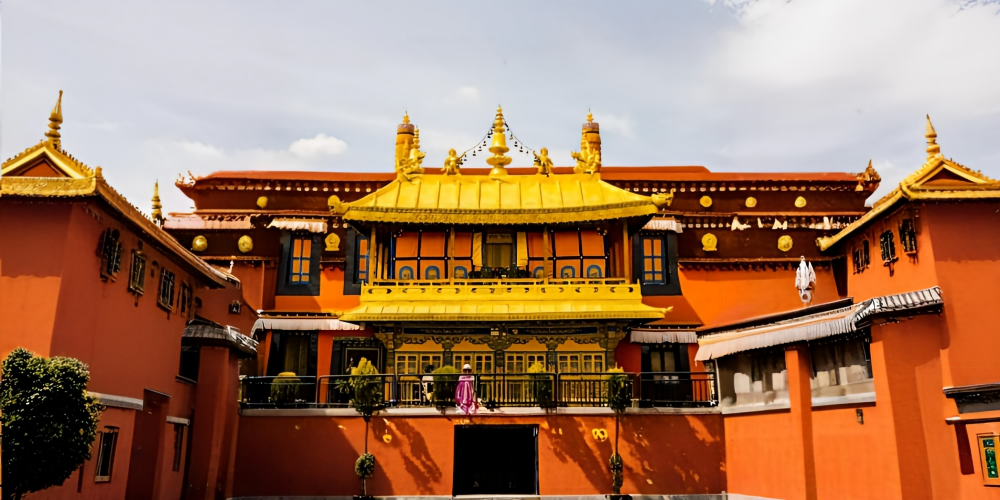
Jokhang Temple
Jokhang Temple, called “Jokhang” in Tibetan, also known as “Zulakang”, is the end point of the pilgrimage for Tibetan Buddhists. In their hearts, the sacredness of Jokhang Temple is no less than that of Potala Palace. Whether from the geographical location or in the minds of Tibetan Buddhists, Jokhang Temple is a veritable holy place and center of Tibetan Buddhism, and has an extremely lofty and holy status in the history of Tibetan Buddhism. Jokhang Temple was first built in the middle of the seventh century AD. It was built by the Tibetan King Songtsen Gampo to place the 8-year-old life-size statue of Sakyamuni brought from his hometown Kathmandu by his wife, Princess Bhrikuti of Nepal. In 1409 AD, Master Tsongkhapa, the founder of the Gelug Sect, promoted Buddhism in Jokhang Temple and held a grand ceremony to spread the Buddha’s teachings, thus establishing its important position in the history of Tibetan Buddhism. In the eighth century AD, the 12-year-old life-size statue of Sakyamuni brought from Chang’an by Princess Wencheng of the Tang Dynasty when she entered Tibet was enshrined in Jokhang Temple, becoming the treasure of the temple and one of the must-see attractions for tourists and pilgrims.In addition, there are nearly a thousand-meter-long Tibetan murals “Princess Wencheng Entering Tibet” and “Construction of Jokhang Temple” in the temple, as well as two Ming Dynasty embroidered guardian deity thangkas, which are rare art treasures. There are three prayer paths in Lhasa, namely “inner, middle and outer”, all of which are centered around Jokhang Temple. Among them, the inner circle around the Jokhang Hall along the Thousand Buddha Hall in the temple is called “Nangkor”; the circle around the Jokhang Temple is called “Bakor”; the circle around the Potala Palace, Yaowang Mountain, Jokhang Temple and Jokhang Temple is called “Lingkor”. Scenic spot guide After entering the Jokhang Temple through the main gate, there is a patio-style courtyard. There are several rows of butter lamps on the east side of the courtyard. Because believers add butter every day, they are always burning. Behind the butter lamps is the main entrance of the Jokhang Temple. On the left side of the gate is Guru Padmasambhava, the founder of the Red Sect, and on the right side is Jampa Buddha, that is, Maitreya Buddha, also known as: Future Buddha. On the right wall is a mural about the story of the Jokhang Temple’s construction, mainly about the appearance of the Potala Palace in the 7th century and the scene of the Jokhang Temple being built by filling the lake. Going clockwise, you will see the Buddhist Hall dedicated to the Yellow Sect’s founder, Master Tsongkhapa, and his eight disciples. Continue to circle right, passing through the Yaksha Hall and the Dragon King Hall on both sides. Behind hundreds of butter lamps is the famous “Jokhang” Hall. It is not only the main body of the Jokhang Temple, but also the essence of the Jokhang Temple. The center of the Jokhang Hall is the Great Sutra Hall, where the lamas chant and practice on weekdays. There are many small sutra halls around it. Among them, the Sakyamuni Buddha Hall in the middle is not to be missed. It enshrines the life-size golden statue of Sakyamuni at the age of 12 brought by Princess Wencheng. This is the center of the Jokhang Temple and a holy place that devout pilgrims yearn for. There are stairs next to the courtyard leading to the second and third floors. On the second floor, there is the Dharma King Hall, which enshrines the Tibetan King Songtsen Gampo, Princess Wencheng, and Princess Bhrikuti, and the Bandan Lhamo Guardian Hall, which enshrines the Goddess of Good Fortune. Standing on the wide terrace on the second floor, you can overlook the Potala Palace, which is a great place to take photos. The golden roof on the third floor is also one of the highlights of the Jokhang Temple, but the third floor is not open to the public most of the time. If you are lucky enough to go up to the third floor, the four magnificent golden roofs will be breathtaking.
-
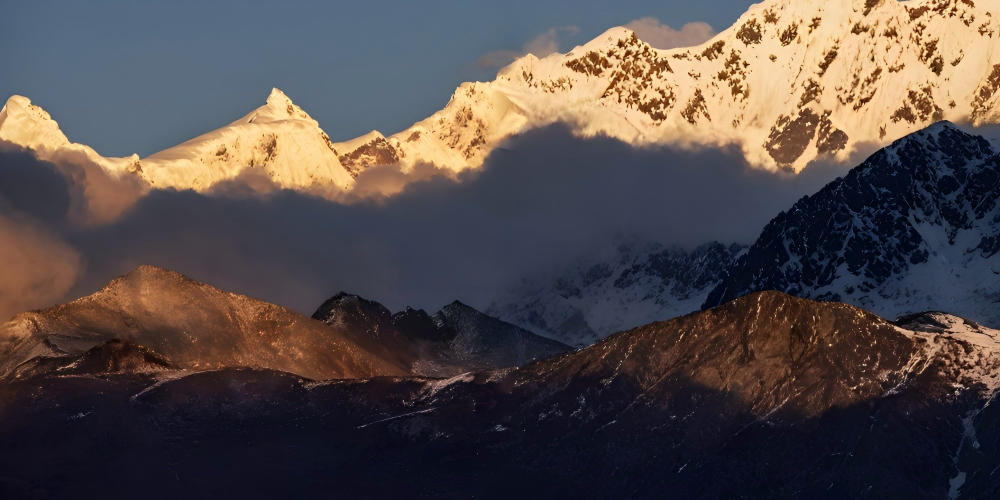
Mount Namcha Barwa
Namcha Barwa Peak is located in Nyingchi. Atop the mountains in the scenic spot are glaciers and thick misty clouds. The vegetation here grows thick and green, creating a beautiful natural environment. There are many places to take in the grandeur of Namcha Barwa Peak. From the Yarlung Tsangpo Grand Canyon Scenic Area Scenic Platform, visitors can take a sightseeing bus to the Yarlung Tsangpo Grand Canyon Scenic Area. The vista here is broad and open. From Sejila Mountain Pass, it is possible to see all the way to the rich scenery of Lunang Forest at the foot of the snowy mountains. Facing towards the snowy mountains, the traditional Susong Village can be seen. Every spring, the peach blossoms and snowy peaks as seen through the flowers make for an even more amazing sight.
-
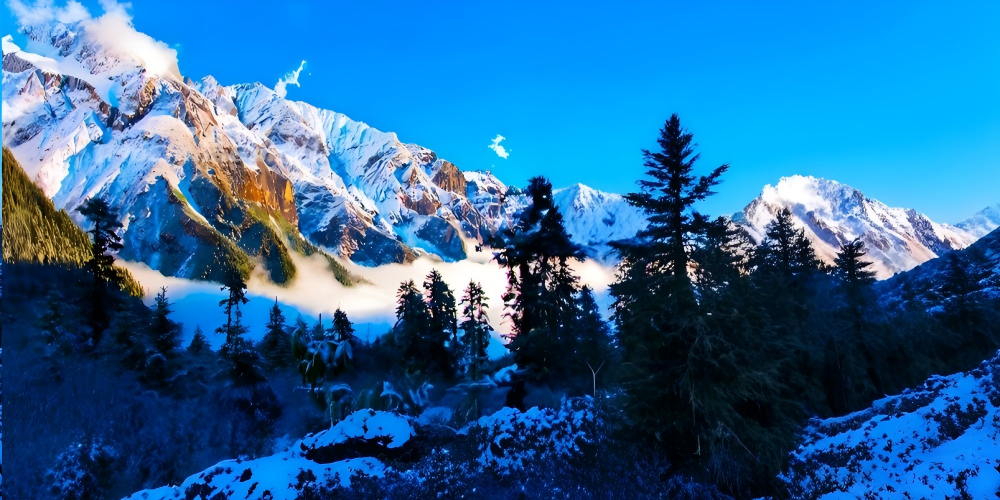
Hailuogou
Hailuogou Scenic Area blends natural beauty with rich historical, tea-horse trade, revolutionary, and folk cultures. This multifaceted destination offers sightseeing, leisure retreats, health recuperation, summer escapes, ecological exploration, scientific research, adventure activities, mountain climbing, and photography opportunities – forming a captivating stop along Sichuan’s western tourism circuit.The attraction originates from the eastern slope of Mount Gongga, with its main valley stretching approx. 30.7 km and covering an area of 220 sq km. Formed 16 million years ago, it features modern maritime glaciers. The entire area showcases vertical bioclimate zones with “four seasons in one valley,” including alpine snow peaks, glacial waterfalls, primeval forests, geothermal hot springs, red stone parks, and glacial forests. It is home to approx. 3,000 species of vascular plants and over 400 species of wildlife.
-
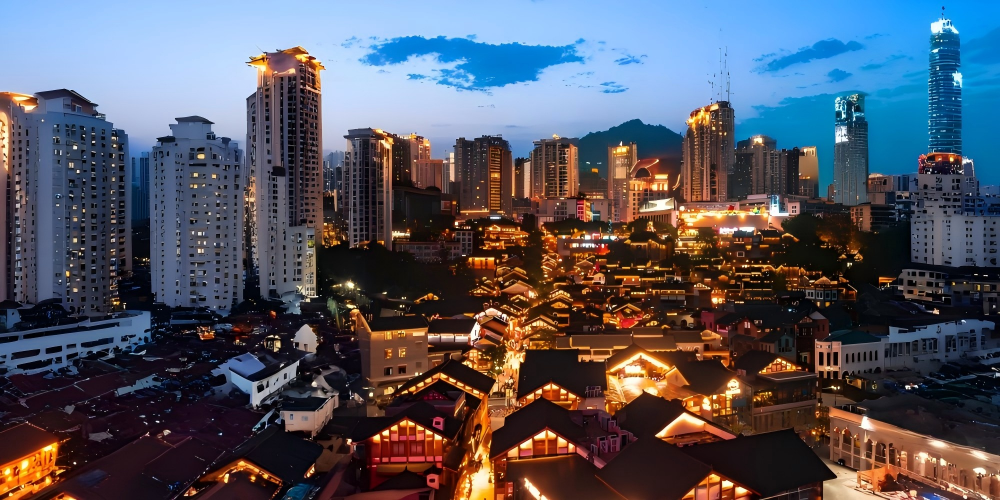
Huanglongxi Town
The ancient town of Huanglongxi is located roughly 40 kilometers from Chengdu and boasts a history of over 1700 years. There are cobbled streets from the Ming and Qing dynasties, along with ancient memorial archways, temples, buildings and houses. A traditional festival is called the Fire Dragon Festival. The event is so well known that Huanglongxi is nicknamed the “the village of the Chinese fire dragon”. The village is used as a set for films today, including films like Hibiscus Town (Fu rong zhen). The local snacks of Huanglongxi are also well-known. One-strand noodle, crispy pork legs, pearl tofu pudding and braised yellow catfish are all worth a taste!
-
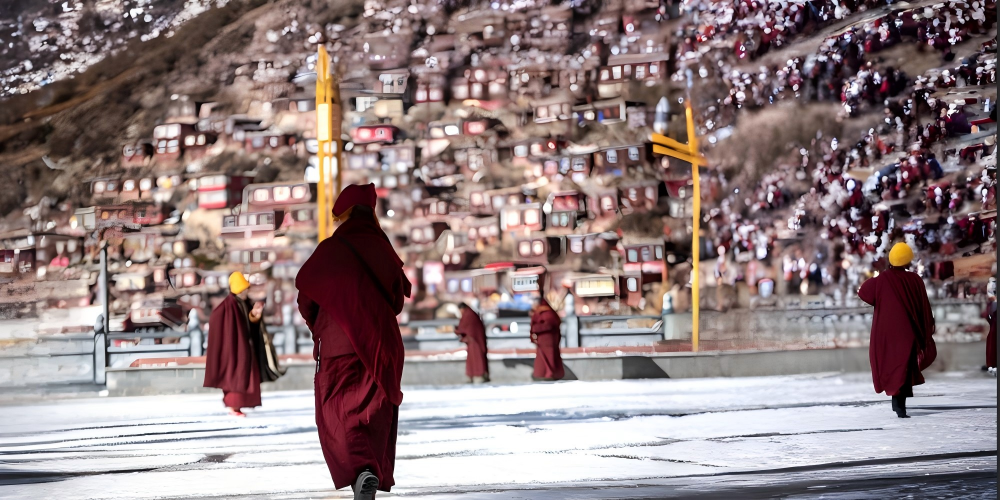
Five Sciences Buddhist Academy
The temple complex is located about 20 kilometers southeast of Seda County, surrounded by mountains. With the Great Sutra Hall as the core, thousands of small wooden houses are densely packed on the hillside like an ant nest. The numerous crimson wooden houses are undulating and spectacular.From the hillside covered with prayer flags southwest of the pagoda, you can overlook the entire Buddhist college and take photos of the entire scene.
-
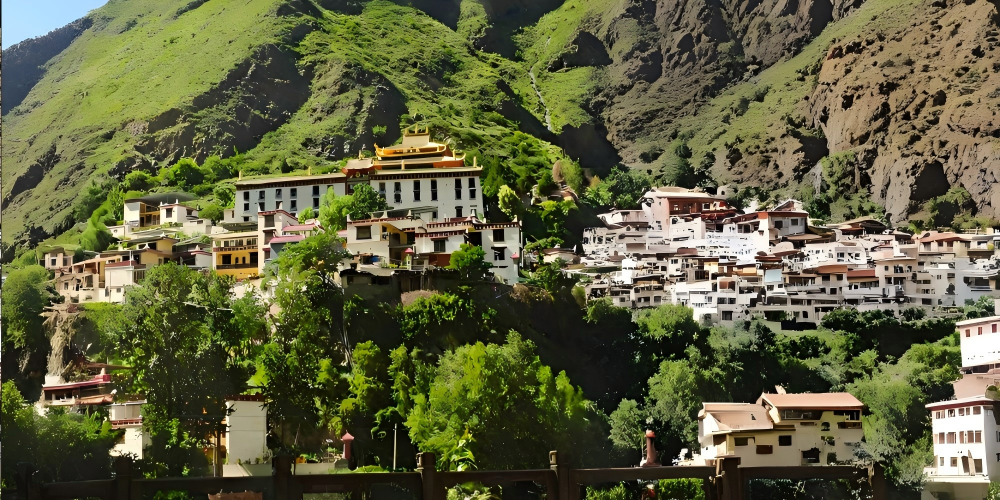
Jiaju Tibetan Village
Jiaju Zangzhai is located in Danba County, Ganzi Prefecture. It is a Tibetan dwelling village with Jiabao Tibetan characteristics. Playing in the Tibetan village, the panoramic view on the hillside opposite the stockade is quite spectacular. After entering the Tibetan village, only a scattered Tibetan-style building can be seen. There is a layer of livestock in the bottom of the building. In turn, there are pots and pans, living rooms, halls and furniture, and some buildings also have balconies. The white walls are painted with sun, moon and stars and religious patterns, beautiful and spectacular.